It’s clear you must balance carp production with conservation: overfishing and pollution threaten stocks, while sustainable breeding, catch-and-release, and habitat restoration offer hope; see research on Balancing Growth and Sustainability in China’s Carp … for policy insights.
Key Takeaways:
- Anglers adopt stronger catch-and-release practices, using unhooking mats, knotless nets, barbless hooks and rapid wet handling to cut carp mortality.
- Habitat management focuses on water quality, natural bank restoration, oxygenation and invasive species control to support healthier carp populations.
- Bait and feed makers shift toward sustainably sourced ingredients and lower-impact formulas, reducing reliance on wild-caught or ecologically damaging components.
- Regulatory frameworks increase, with more seasonal closures, size limits and local bylaws paired with enforcement and community-led codes of conduct.
- Technology and monitoring expand through telemetry, eDNA surveys and angler apps that track stocks, detect trends and guide adaptive management.
- Manufacturers and venues reduce single-use plastics, phase out hazardous materials like lead weights and implement recycling and reusable tackle options.
- Clubs, media and brands run education campaigns and certification schemes that build angler stewardship and reward sustainable practices.
Eco-Friendly Tackle and Gear Innovations
You can expect gear designers to prioritize materials that cut waste and harm, with biodegradable lines and non-toxic fittings reducing angling’s environmental footprint while keeping performance high.
Transitioning from Lead to Non-Toxic Weight Alternatives
Switching to tungsten, tin, or coated alternatives helps you avoid lead poisoning risks to waterfowl and fish, while maintaining accurate casting and reducing long-term environmental harm.
Development of Biodegradable Lines and Sustainable Plastics
Manufacturers now produce lines and components that biodegrade and reduce microplastic shedding, letting you cut pollution while preserving the strength needed for carp fishing.
Research into PHA, PBS and modified polyesters means you can buy lines that biodegrade in freshwater or composting conditions; check certifications like ASTM D6400 or OK Compost to verify claims. These polymers can match tensile strength but may require UV-resistant coatings to prevent premature failure. You should store them dry and swap old traces to avoid microplastic shedding, choosing certified products and proper disposal to protect waterways while retaining reliable performance.
Habitat Conservation and Water Quality Management
You must protect riparian buffers and monitor nutrients so oxygen levels stay stable; adopt remote sensors and automated responses – This is the high-tech future of fishing that helps you detect problems fast.
Protecting Native Biodiversity and Aquatic Flora
Guarding native species and aquatic plants, you limit invasive carp spread by restoring vegetation, creating refuges, and enforcing seasonal access to preserve spawning habitats and water clarity for anglers.
Implementing Advanced Aeration and Monitoring Systems
Aeration systems and continuous sensors let you maintain safe dissolved oxygen, spot algal blooms early, and trigger alerts so you can act before fish kills occur.
- Install solar-powered aerators to stabilize oxygen during heat events.
- Deploy real-time sensors for pH, turbidity, and dissolved oxygen.
- Set automated alerts to notify managers and volunteers of threshold breaches.
Actions and Benefits
| Action | Benefit |
| Solar aerators | Maintain oxygen during low-flow periods |
| Real-time sensors | Early detection of algal blooms and pollutants |
| Automated alerts | Faster response, reduced fish mortality |
Monitoring networks provide continuous data so you can set site-specific thresholds, schedule aeration, and prioritize interventions to protect fisheries and prevent acute fish kills.
- Calibrate sensors seasonally to ensure accurate readings.
- Integrate data with mobile alerts for rapid field response.
- Train volunteers to interpret dashboards and deploy mitigation.
Implementation Details
| Component | Consideration |
| Sensor placement | Near stratified zones and spawning sites |
| Power source | Solar with battery backup for reliability |
| Response plan | Predefined actions when thresholds trigger |
Advancements in Fish Care and Handling Protocols
Angling practices now prioritize gentle fish care, helping you reduce handling time and lower disease transmission while improving survival rates for released carp.
Use of Eco-Conscious Antiseptics and Protective Slings
You choose biodegradable antiseptics and padded slings to treat wounds and support carp, reducing infection risk and stress; avoid harsh chemicals that harm water quality.
Minimizing Specimen Stress Through Modern Catch-and-Release Standards
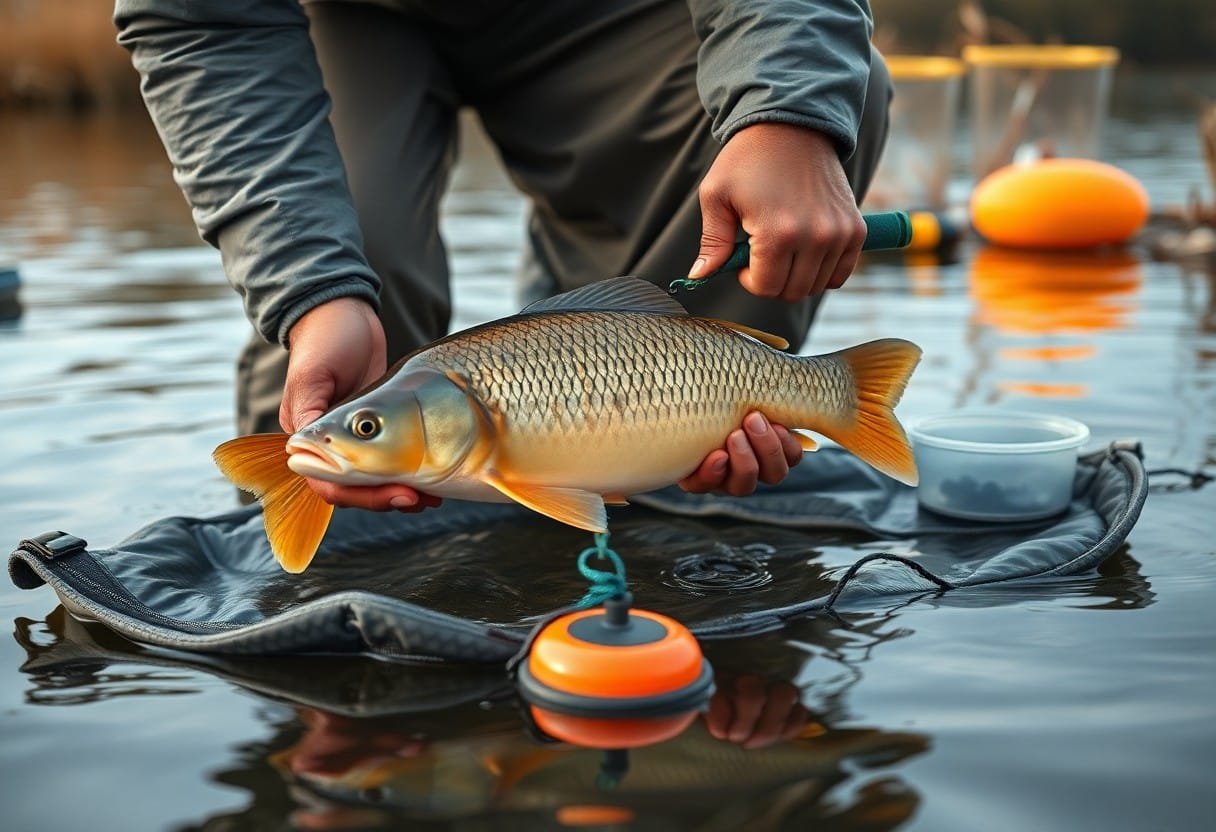
Adopt wet hands, shortened air exposure, and swift release to preserve carp health, with air exposure under 10 seconds often recommended to reduce mortality.
Practice careful netting, immediate hydration, and at-rod-side recovery in shaded water so you limit exhaustion; use breathable slings and monitor gill movement until the carp swims strongly, cutting post-release mortality.
The Evolution of Carbon-Neutral Fishery Management
Carbon-neutral fishery management asks you to track emissions, adjust stocking and gear choices, and invest in habitat work that delivers measurable emissions cuts and biodiversity gains.
Renewable Energy Integration in Venue Infrastructure
Solar panels and battery storage let you power pumps, lighting and warmers on-site, delivering reduced grid dependence and lower running costs while supporting continuous kit operation.
Circular Economy Approaches to Waste and Packaging
Reusing tackle packaging and offering bulk bait refills lets you cut litter and supply-chain footprint, promoting zero-waste events and measurable cost savings.
You can deploy marked collection bins, supplier take-back deals and refill stations so packaging feeds a closed-loop system; that cuts landfill and procurement spend while limiting contamination risks and revealing savings through regular waste audits and angler incentives.
Regulatory Shifts and Angler Education
Regulations increasingly require anglers to update practices, so you follow new bag limits, use mandatory unhooking mats, attend local workshops and respect penalties for illegal stocking that protect stocks.
Environmental Certifications for Commercial Waters
Certification programs let you choose commercial waters that enforce low-pollution feed, regular health screenings and habitat restoration, reducing disease risk and rewarding responsible operators.
Promoting Long-Term Stewardship within the Angling Community
You can join club initiatives that teach proper handling, routine biosecurity checks and invasive-species reporting, promoting peer-led catch-and-release standards to preserve stocks for future anglers.
Community networks provide training, mentorship and on-water patrols so you adopt consistent care standards, log catches for citizen science and report illegal activity; this reduces disease transmission and discourages unauthorized stocking, while trusted stewardship programs reward members who practice ethical angling and support habitat restoration.
Conclusion
With this in mind, you adopt eco-friendly tackle, practice catch-and-release, support habitat restoration and obey improved regulations, ensuring carp populations and water quality recover so you enjoy sustainable, thriving fisheries for years to come.
FAQ
Q: What does sustainability mean for carp fishing?
A: Sustainability in carp fishing means protecting fish welfare, preserving water quality, and managing habitats so that carp populations and angling opportunities persist long term. Anglers and clubs are adopting catch-and-release norms, improving handling techniques, reducing pollution and litter at venues, and working with fisheries managers on stocking and population monitoring to keep ecosystems balanced.
Q: How are tackle and bait manufacturers responding to sustainability concerns?
A: Manufacturers are producing biodegradable rigs, lead-free weights, and packaging with reduced plastic. Bait producers increasingly use traceable, responsibly sourced ingredients and offer lower-impact formulations that avoid invasive feedstocks. Brands are also testing materials for fish safety and longer-term environmental effects before wide release.
Q: How are catch-and-release practices changing to improve carp survival?
A: Anglers now use unhooking mats, knotless nets, barbless hooks, and quick-release techniques to lower stress and injury. Standard operating practices at matches and clubs emphasize wet hands, minimal air exposure, proper revival methods, and hasty photographing. Training courses and angling codes of conduct reinforce consistent, welfare-first handling across venues.
Q: What habitat and water-quality measures are helping carp fisheries thrive?
A: Restoration of riparian vegetation, reed beds and spawning grounds improves shelter and oxygenation while reducing runoff and sedimentation. Active monitoring for nutrient loads, targeted aeration during low-oxygen events, and stronger controls on agricultural and urban pollution help maintain healthy food webs. Collaborative work between anglers, landowners and conservation bodies makes many of these measures possible.
Q: How is climate change affecting carp fishing and what adaptive steps are being taken?
A: Warmer water temperatures change carp behavior, extend growth seasons in some areas, and raise risks of algal blooms and low-oxygen incidents. Managers are creating thermal refuges, adjusting stocking timing and densities, and increasing real-time water monitoring to respond to heatwaves and droughts. Angling schedules and venue rules are being adapted to reduce stress on fish during extreme weather.
Q: What role do policy, community action and certification play in sustainable carp fishing?
A: Local regulations on catch limits, closed seasons and habitat protections give legal backing to conservation goals. Community activities such as clean-ups, habitat projects and citizen science monitoring build stewardship and data for decision-making. Certification schemes and angling-club accreditation programs recognize venues and operators that meet welfare and environmental standards, guiding anglers to responsible choices.
Q: How will technology and monitoring shape sustainable carp fisheries in the future?
A: Technologies such as eDNA surveys, telemetry tagging, remote sensors for oxygen and temperature, and mobile apps for reporting catches and water quality enable faster, data-driven management. Automated feeding and stock monitoring reduce human disturbance when used responsibly. Ethical data use and low-impact hardware choices will be important to ensure technology helps conservation without adding unnecessary environmental cost.