
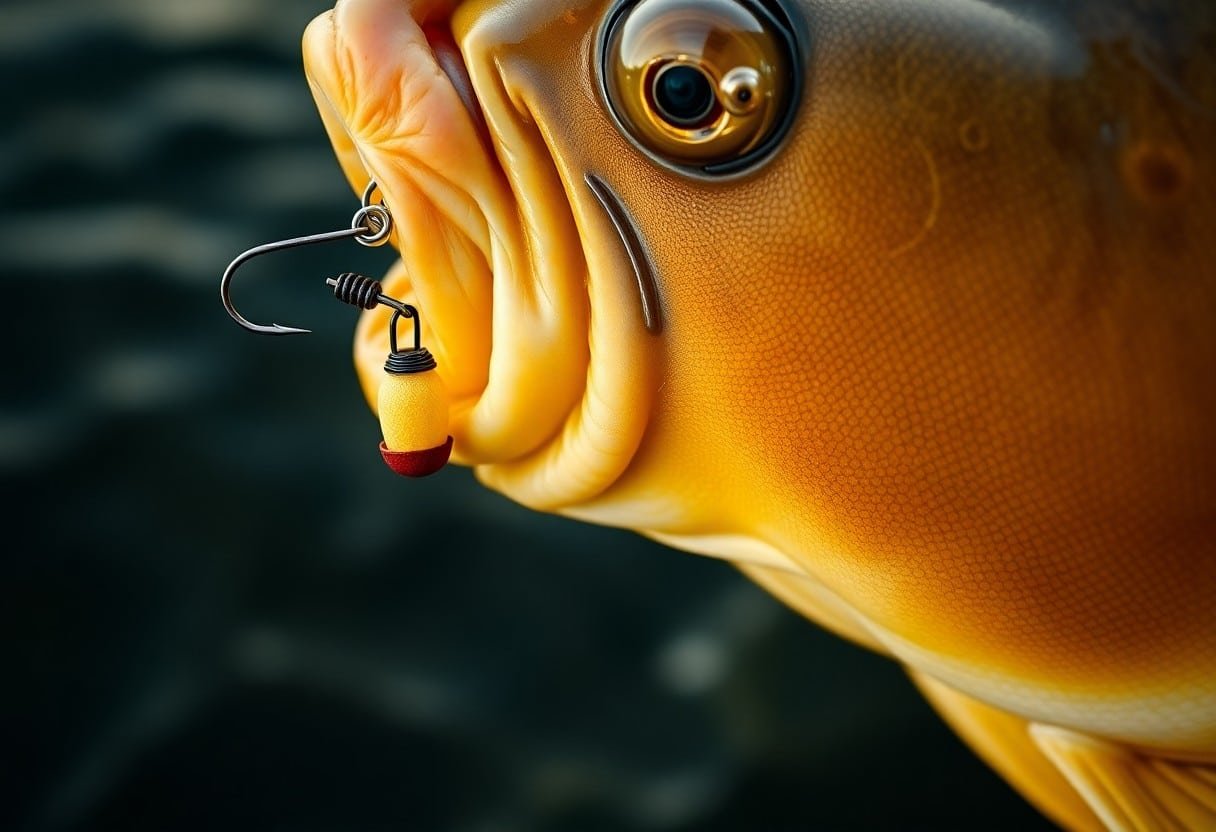
Rigs present bait naturally and hook carp with exceptional efficiency, giving you a very high hookup rate while improving strike detection; the method can increase the risk of deep hooking, so you must use careful playing and correct hook choice for safe, effective results.
Key Takeaways:
- Hair rigs present bait off the hook, allowing carp to suck in the bait without feeling hook resistance.
- Sliding bait on the hair keeps the hook separate from the bait, improving hook holds when carp turn to eject it.
- Presentation with no visible hook lowers suspicion and increases takes from wary fish.
- Minimal obstruction from the hook lets the bait move naturally on the bottom, appearing more convincing.
- Exposed hook points encourage quick penetration during typical carp mouth movements.
- Adjustable hair length and rig components let anglers match different bait types and conditions.
- Consistent success across waters and seasons has made the hair rig a standard choice for carp anglers.
The Mechanics of the Hair Rig
Structure positions the bait away from the hook so when you present it a carp takes the bait and the hook pulls free; see Understanding Carp Rigs… Part I. That yields higher hook-up rates but can cause deeper hooking if you set too hard.
Separating the Bait from the Hook
Separation lets you disguise the hook so carp swallow the bait fully, giving you cleaner, more reliable hook-ups while reducing visible metal; adjust bait length to prevent the hook sliding free.
Understanding the “Bolt Effect”
Bolt effect happens when a carp moves off with the bait and the rig pins the hook automatically; you should keep line tension and a firm rod to exploit instant, secure hook-ups without striking prematurely.
You can exploit the bolt effect by using a short, stiff rig and snug tubing or a boom to transfer drive to the hook, so the hook turns and sets without a strike; keep steady tension to benefit from the self-hooking action while avoiding excessive pressure that risks deep hooking or tearing.
Improving Hooking Efficiency
Hair rigs improve your hooking by presenting the bait off the hook so a feeding carp draws it, creating natural suction that seats the hook point and reduces missed takes.
Natural Suction and the Mechanics of Ejection
Suction created by the carp drawing the bait causes the hook to seat; you benefit because the bait sits free, reducing resistance and allowing the hook to travel inward during the fish’s ejection reflex.
The Physics of the Turning Hook
Turning hook dynamics rely on line angle and the carp’s head shake so you get hook point rotation into the mouth, increasing penetration while the hair keeps the bait unimpeded.
Line angle, knot position and hook length change torque so you can tune the rig for rapid rotation; shorter hooks and correct hair length create consistent rotation and higher hookup rates, while heavy rigs risk mouth tearing on soft-mouthed carp.
Presentation and Bait Movement
You control subtle bait movement with a hair rig, giving the hookbait a natural fall that triggers shy carp while keeping the hook free to set. Aim for gentle, lifelike motion to reduce spooks and increase takes without extra disturbance.
Providing Unrestricted Movement for Wary Fish
Your hair rig lets the hookbait drift naturally, so suspicious carp can inspect without feeling tension. This free presentation increases mouthfuls and improves hook holds because the hook stays unobstructed while the bait moves in current or slack.
Balancing Buoyancy with Pop-ups and Wafters
Choosing the right mix of pop-ups and wafters lets you control sink rate and presentation, keeping the bait just off the bottom where carp feed. Use slight lift to avoid snags while keeping the hook orientation optimal for quick hook-ups.
Experiment with buoyancy until you find a subtle lift; too buoyant pop-ups can alarm wary fish while underweighted wafters risk foul hooking. Adjust foam, drill or trim baits so you maintain natural presentation and minimize tangles for consistent hook placement.
Versatility Across Bait Types
Versatility of the hair rig lets you present everything from large boilies to tiny particles naturally, reducing bait suspicion and increasing bite rate in carp fishing while preserving a secure hookhold.
- Boilies: stable, long-distance presentations
- Pellets: compact, attractive profiles
- Corn & particles: multiple-grain tactics
| Boilies | Clean presentation; improves hookhold |
| Pellets | Dense profile; good for short-range feeding |
| Pop-ups | Suspends bait; avoids snags |
| Particles | Offers natural forage mix; needs micro-hair |
| Corn | Attractive visual cue; rigs must protect the grain |
Optimizing Hard Baits: Boilies and Pellets
Boilies sit on the hair cleanly, so you can fish heavier presentations and trust the hookhold; match hair length and hook size to bait weight to avoid missed hookups.
Adapting for Small Particles and Corn
Particles require micro-hair setups so you can present multiple grains naturally; use fine hooks and subtle elastic to keep attraction high without compromising the hookhold.
You can bind corn or hemp with elastic or mesh to form tidy hairs, letting you fish higher bait counts while keeping natural movement and scent release. Overweighting or bulky knots increase the risk of missed hookups and line abrasion, so test rigs before casting. Thou trim hairs and trial-cast to ensure clean release and reliable hookpoint exposure.
Safety and Fish Welfare
Safety on the bank depends on how you present rigs and handle carp; you should use quick, gentle unhooking and consider barbless hooks – check community tips at OK, So Why Do Hair Rigs Work? | FishingMagic Forums.
Ensuring Consistent Bottom Lip Hook Holds
You position bait to encourage bottom-lip hooking by matching hair length and hook size, using a stiff hooklink so the point stays presented, giving reliable lip holds and faster, safer plays.
Minimizing Damage and Deep Hooking Risks
Adopt barbless hooks, short hair lengths and quick unhooking to reduce deep hooking; you should play fish steadily and use a retainer sling to minimize injury.
Careful rigging and bait placement mean hooks sit on the lip, not the throat; you can add anti-eject baits, tie short, stiff hooklinks, carry long-nose forceps and a sling, and stop fights early to further reduce deep-hooking and tissue damage while speeding safe returns.
Evolution of Modern Rig Variations
Changes in rig design have expanded how you present baits, with hair rigs evolving into variants that improve hook holds and reduce line visibility, letting you match tackle to feeding behaviour and lakebed conditions.
The Functionality of the Blowback Rig
Blowback rigs let you present pop-ups so the hook flips into the corner of the mouth; you gain higher hookup rates but must manage hooklink length to avoid snags or weed fouling.
Specialized Setups for Different Lakebeds
When fishing silt you use softer hair and light leads, on gravel you shorten hooklink and firm up the bead, while weed demands anti-tangle sleeves-choices that lower snag risk and boost presentation.
Gravel spots demand that you use short, stiff hooklinks and tight inline leads to keep baits steady; in silt you prefer buoyant pop-ups and flexible leaders to stop burying, and in weed you switch to weedless rigs or zig patterns-adjust hair length, hook size and anti-tangle gear to cut line abrasion, reduce snap-offs and raise hookup confidence.
Summing up
The hair rig keeps the bait separate from the hook so the carp sucks it and you get reliable hookups, natural bait presentation, and less spooked fish; simple setup and subtle action increase your catch rate when you fish for wary carp.
FAQ
Q: What is a hair rig and how does it differ from other carp rigs?
A: A hair rig uses a short length of line (the “hair”) to attach the bait separately from the hook, leaving the hook point exposed. This separates bait presentation from hook mechanics, allowing the bait to sit naturally on the lakebed while the hook hangs free. The design encourages carp to take the bait without feeling the hook, increasing the chance the hook will engage in the corner of the mouth rather than deeper in the throat.
Q: Why do hair rigs increase hooking efficiency?
A: The exposed hook point and independent bait create a levering action when a carp mouths the offering, dragging the hook into the mouth rather than forcing the fish to move the hook itself. Hook shapes with a curve or wide gape work with the hair to rotate and catch the lip reliably. The hair also prevents the bait from masking the hook, so a clean, quick hook hold is more likely when the angler strikes or the fish swims off.
Q: How does the hair rig improve bait presentation and carp confidence?
A: The bait sits naturally and can move independently from the hook, which reduces suspicion from wary fish. Small, subtle presentations such as single boilies, pellets or particles look more like natural food when tethered on a hair. Baits that are not mounted directly on the hook reduce the chance of carp detecting the metalwork and rejecting the offering.
Q: What role do bait types and attachments play with hair rigs?
A: Boilies, pellet hardbaits and pop-ups are easy to mount on a hair using a baiting needle, silicone stop or bait band, which keeps the bait secure while preserving a natural presentation. Pop-ups on a hair can be balanced to sit just above the lakebed for better visibility, while bottom baits sit attractively for feeding carp. Small changes in hair length and stop placement control how the bait presents and how the hook sits relative to the mouth.
Q: How important are hook choice and knot technique for hair rigs?
A: Hook selection and tying method are central to performance; curved shank and wide-gape hooks combined with sharp points create reliable penetration and holding power. Knotless knots, knotless knot variations or the loop knot used for hair rigs ensure the hook sits at the correct angle and the bait remains free. Hooklink material, length of the hair and use of anti-tangle tubing all influence how the hook presents and how well it will catch.
Q: When might a hair rig be less effective and what adjustments help?
A: Heavy weed, strong current or extremely short feeding windows can reduce hair rig success because the rig can tangle or the bait presentation may need altering. Shortening the hair, adding an anti-tangle sleeve, using a weight on the hooklink or switching to a pop-up setup can solve many issues. Changing hook size, shape or moving to a combi- or chod-style arrangement will help when bottom conditions or fish behaviour demand a different approach.
Q: How should anglers detect bites and set the hook with hair rigs?
A: Bites are often subtle because the carp can hold and mouth the bait; anglers should watch rod tip movement, alarm signals or line behaviour rather than expecting violent takes. A short delay of a second or two before striking allows the fish to draw the bait and let the hook turn, though timing depends on angler preference and fish activity. Soft pressure to confirm the take followed by a firm but controlled strike gives the hook the best chance to catch in the lip without pulling the bait free.