
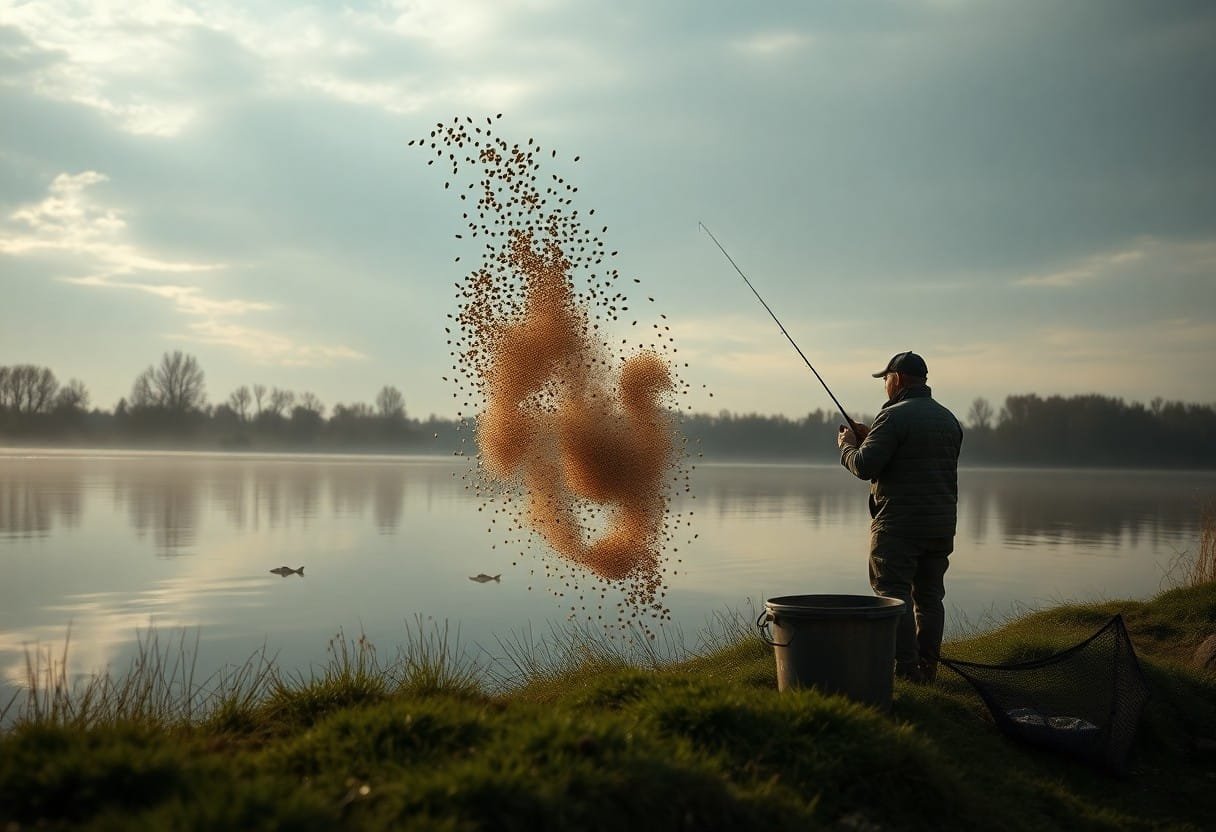
Just master spodding for rapid, wide baiting and spombing for precise presentation; you boost catch rates, cut lakebed disturbance, and avoid snagged lines. See Brian Skoyles talks us through the benefits of using a …
Key Takeaways:
- Spodding and spombing deliver bait with high accuracy to targeted feeding spots, increasing bite potential.
- Spodding and spombing allow large amounts of bait to be applied quickly, reducing time spent re-baiting.
- Controlled delivery reduces surface disturbance and spooking compared with hand-throwing bait.
- Creates consistent, concentrated feeding zones that encourage carp to feed predictably.
- Saves angling energy by covering distance and area with fewer casts and less effort.
- Works with particles, pellets, boilies and liquids for tailored baiting approaches.
- Improves hookbait presentation and enables tactical adjustments like clearing lines or concentrating feed.
Precision and Accuracy at Long Range
Accuracy lets you place spod and spomb casts beyond regular range so you can feed specific features and keep other anglers’ areas clear. By sharpening your cast placement you create predictable feeding spots and reduce time searching, increasing your chances of a hook-up.
Concentrating Bait for Faster Hook-ups
Concentration of bait into a tight patch forces carp to feed more aggressively, so you see faster hook-ups. You should aim for consistent pellet sizes and a single targeted area with spomb/spod to keep fish focused on your hookbaits.
Maintaining Tight Feeding Zones in Adverse Weather
Wind and low pressure scatter carp, so you must use spodding and spombing to lay a compact trail of bait that holds fish in place. Use shorter, accurate bursts to avoid overfeeding and to preserve a controllable feeding zone despite the conditions.
Adjustments in bait type, quantity and drop pattern help you maintain a tight zone when weather shifts. You should reduce loose free offerings, opt for denser pellets or boilies, and place bait slightly upwind so fish feed into the current; this minimizes drift and lowers spooking risk, keeping bites concentrated around your rigs.
Versatility of Bait Application
Spodding lets you place bait exactly where you want, so you can build and maintain a feeding area. You can vary volumes and mixes to match conditions, giving you precision and consistency, while avoiding overfeeding that spooks fish.
Delivering Varied Particle and Pellet Mixes
Mixing particle and pellet blends with a spod or spomb lets you create tailored feeding spots, giving you consistent attractors and reducing wastage while keeping your hookbait presentation intact.
Creating High-Attraction Liquid Columns
Using spombs to disperse liquid feed produces a scent plume that draws carp quickly, creating intense feeding activity and giving you faster bites when placed accurately.
Aim to create a steady, rising column by mixing concentrated liquids with water in the spomb, releasing just above the chosen zone so the plume sinks and spreads; this gives you a long-lasting scent trail and rapid carp response. Watch wind and current to avoid drifting the column away, and avoid over-concentration that can repel fish.
Efficiency and Speed of Delivery
Spombing and spodding let you deliver bait faster and with greater accuracy, creating a concentrated feed area that quickly stimulates carp activity and increases bite rates.
Rapidly Establishing a Feeding Area
Using a spod or spomb lets you saturate a spot rapidly, producing consistent feeding cues that concentrate fish and shorten time to action when you cast for bites.
Reducing Physical Fatigue During High-Volume Baiting
Reducing the number of individual throws, spombing cuts strain on your arms and shoulders so you can maintain accuracy longer and stay focused on fishing rather than recovering.
Longer sessions become manageable because a spomb’s larger payload and controlled release let you cover water with fewer casts, reducing the risk of repetitive strain and preserving your stamina; you’ll keep a consistent baiting pattern, maintain precise rod action, and avoid cumulative wear that forces early pack-ups.
Technical Superiority of the Spomb Design
Spomb design gives you precise, controlled bait delivery thanks to its vented body and secure closure, ensuring minimal spillage and consistent deployment.
Eliminating Bait Spillage During the Cast
Vents and a locking tail let you cast heavy loads without losing bait, so the secure closure prevents messy mid-air spills and your feed lands where you aim.
Aerodynamic Benefits for Maximum Distance
Streamlined profile reduces drag so you achieve maximum distance with repeatable accuracy, enabling placement on distant features with less effort.
Design tweaks-angled fins, refined nose cone, and internal weight balance-stabilize flight to cut wobble and reduce wind drift, giving you longer, more accurate casts that place bait consistently and lower time spent correcting miscast feed.
Stimulating Competitive Feeding
Spodding compels carp into a feeding scramble, forcing them to expose themselves and giving you more bites, while careful baiting prevents overfeeding that dulls the swim.
Creating a Visual and Olfactory “Dinner Bell”
Scented spod loads make a visible slick and odour trail that acts as a dinner bell, drawing carp to your swim and concentrating them on your hookbaits so you get clearer shot opportunities.
Holding Large Shoals of Carp in the Swim
Concentrating particles with a spomb keeps carp feeding in the swim, turning single cruisers into a large shoal and giving you a sustained window to present hookbaits.
When you keep topping up with measured spod loads, carp accept the spot as safe and form persistent shoals, giving you a sustained bite window to experiment with rigs and depths. You can rotate particle size to control feeding intensity and avoid overfeeding that scatters fish. By varying timing and quantity you maintain pressure and maximise catches.
Adaptability to Different Environments
Spodding and spombing let you adjust bait volume and placement across margins, open water, or gravel, giving you precision to match conditions and increase hookups without re-rigging constantly.
Effective Baiting Over Silt and Weed
Silt and weed hide particles; you can use spodding to deliver bait gently above weed or patch, reducing snag risk and keeping presentation clean to attract wary carp.
Managing Bait Presentation at Varying Depths
Depth adjustments let you place spod or spomb payloads at specific layers so you can target cruising fish or beds with precise presentation while avoiding wasted bait.
Practice varying cast angle, payload density and flight time so you can sink bait into mid-water or lay it on the deck; watch for overbaiting that can spook fish and use shorter, denser loads to hold shallow feeders. Use subtle mix changes to tune sink rates and maximize hookups without increasing snag risk.
Summing up
Taking this into account, you can use spodding and spombing to concentrate bait, cut wastage, control presentation and boost catch rates; consult Spodding techniques to refine your approach.
FAQ
Q: What are spodding and spombing, and how do they benefit carp anglers?
A: Spodding and spombing are methods of delivering concentrated bait to a chosen spot using a purpose-built device (spod or spomb) that opens on impact. These techniques allow anglers to put exact amounts of bait at long range, create predictable feeding zones, and reduce the time spent hand-feeding or inaccurately casting loosebait. Controlled baiting promotes consistent fish behavior around the chosen area and makes follow-up casts more effective.
Q: How do these methods improve bait placement accuracy?
A: The weight and aerodynamic shape of spods and spombs produce repeatable long casts that land in the same location from session to session. Anglers can mark precise spots with a marker float and deliver bait to those GPS or visual points. Precise placement concentrates bait into a tight patch, reduces wastage across the lake, and helps establish a clear feeding area that carp learn to return to.
Q: In what ways do spodding and spombing affect carp feeding behavior and attraction?
A: Regular, targeted baiting encourages carp to feed confidently in a defined area because food becomes predictable and abundant there. The falling bait cloud and small particles create scent trails and visual cues that attract fish from surrounding water. Controlled feeding patches often hold fish longer and make them more likely to feed naturally on presented rigs inside the baited zone.
Q: Can spodding and spombing increase catch rates and hookup success?
A: Concentrating fish into a concentrated feed patch raises encounter rates between carp and baits, which typically increases the number of hookups. The ability to bait precisely around a rig or to top-up a feed after a bite keeps fish present during the crucial strike window. Responsible use of bait quantities is important to avoid dulling feeding responses through overfeeding.
Q: How do these methods save time and effort on the bank?
A: Spods and spombs allow large amounts of bait or fast groundbait mixes to be delivered quickly at range, removing the need for repeated, laborious hand-throws or many individual casts. A single accurate cast can replace several minutes of manual baiting. Time saved on baiting can be used for better rod placement, observing fish activity, or testing different hookbaits.
Q: Do spodding and spombing reduce disturbance and help present baits more naturally?
A: The falling, contained bait from a spomb or spod creates a relatively gentle presentation compared with splashing loose handfuls of bait, which can spook wary carp. Targeted baiting also reduces boat or bank movement since fewer returns to the water edge are needed. Controlled bait placement allows rigs to be positioned within the feed patch without excessive disturbance, improving natural presentation and hookup chances.
Q: How do I choose between a spod and a spomb, and what practical tips maximize benefits?
A: A spod is typically a solid, vented stick that breaks on impact, while a spomb is a box-like pod with a hinged lid that opens to release bait. Spombs often offer cleaner releases for moist or sticky baits and can be more accurate for tight feeding spots; spods can be lighter and sometimes cast further with the same setup. Practical tips include matching the device to bait type, using marker floats to practice repeatable casts, starting with measured bait amounts to avoid overfeeding, and maintaining equipment to ensure reliable opening on impact.