
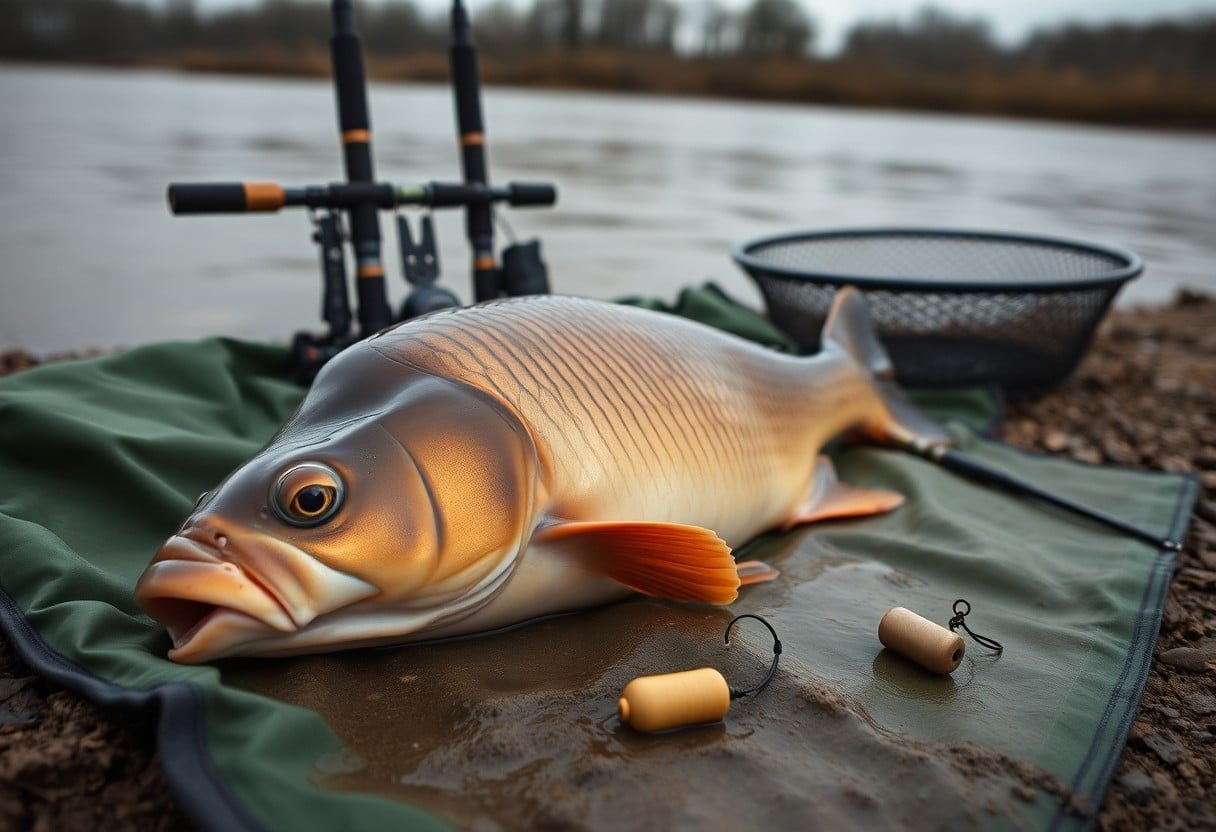
Carp anglers teach you bottom fishing presents bait precisely, changing tactics to increase catch rates; higher hookup rates, greater snag and line-break risk, and more consistent larger carp force smarter gear choices-see How a different approach can catch more carp.
Key Takeaways:
- Shift to bottom-baited boilies moved angler focus toward precise bait presentation and hair rigs.
- Rig innovation like the hair rig, safety clips, and anti-eject designs raised hookhold rates and reduced lost fish.
- Targeting lakebed features encouraged anglers to study contours, plateaus, and silt types when choosing spots.
- Spodding, PVA bags, and particle pre-baiting concentrated fish and turned short sessions into planned baiting strategies.
- Echosounders and baitboats enabled accurate bait placement and depth targeting, favoring precision over brute-force casting.
- Emphasis on safe rigs and unhooking practices improved fish welfare and catch-and-release success.
- Long-range tactics and heavier terminal setups increased demand for stronger rods, smoother drags, and larger leads to hold bottom.
The Evolution of Rig Mechanics and Hooking Efficiency
Rigs have shifted from simple set-ups to designs that give you higher hookup rates, as modern mechanics favor hooking efficiency and fewer missed takes.
Transition from running rigs to the self-hooking bolt effect
Designers moved rigs toward the self-hooking bolt effect, so you can expect quicker, more reliable hookups when a carp turns on bait with minimal angler input.
Development of specialized hooklinks for varied lakebeds
Materials and braid choices now let you match hooklink sinking and presentation to silt, gravel or weed, giving you better concealment and reduced break-offs.
Testing across bottoms shows you need denser hooklinks like fluorocarbon in silt to reduce drag and secure a clean hookup. Stiffer braid keeps point alignment on gravel while softer mono beds into weed. You must monitor abrasion and knot strength to avoid losing giants to subtle damage.
Strategic Shift in Baiting Patterns
You now focus baiting on concentrated feeding zones, preferring precision over scatter; this boosts catch rates but brings a danger: overbaiting can condition or spook fish, so you must balance attraction with stealth.
Concentrated feeding zones versus wide-area baiting
Targeting tight spots lets you create intense local attraction and reduce wasted feed; wide-area tactics still work in unpredictable water, but you risk diluting feeding pressure and lowering hookups.
The integration of heavy particles and pellet-based approaches
Combining heavy particles with pellets gives you rapid sink rates and sustained clouding to trigger feeding, though you must avoid over-concentration that teaches fish to feed cautiously.
Pellets allow you to control feed profile: pre-soaked pellets form a persistent feeding bed while larger particles provide fast sink into your hook zone. You should mix sizes, employ PVA or spod mixes to focus spots, and stagger delivery to prevent over-conditioning or increased tangle risk near snags.
Precision Lead Systems and Weight Distribution
Precision lead systems let you control bait presentation and reduce snag and cast failure. Choose leads to match bottom contours and balance rod feel; learn more about broader control methods at Fishing as a carp control method.
Influence of safety clips and inline leads on presentation
Clips and inline leads change how your rig settles, letting you trade presentation precision for quick release under heavy snag pressure so you can avoid line breaks and lost gear while keeping bait natural on the bottom.
Selecting lead shapes for silt, gravel, and clay surfaces
Match lead shape to bottom so you stop unwanted movement: bulb leads for soft silt, torpedoes for gravel, and low-profile leads for sticky clay to keep your bait visible and stable under current.
Consider testing shapes on-site: roll leads to see how they settle, then adjust for wind and current; small changes in shape or weight will improve hookup rates and reduce snags, especially on mixed silt-gravel edges where fish feed.
Understanding Underwater Topography and Substrate
Topography under your boat dictates where carp hold; reading contours and substrate helps you place baits on edges, holes and shelves. Use sounder sweeps to spot texture changes-silt conceals rigs while gravel and shell mark feeding zones.
Advanced techniques for reading bottom composition
You refine sonar settings, angle sweeps and slow drifts, then mark transitions and pockets. Probe drops for gravel bars and note hidden snags; match rig weight and hook type to substrate firmness to reduce foul-ups.
- You watch for sudden echo loss indicating deep silt pockets.
- You map short, hard returns that highlight gravel bars and feed areas.
- You flag weed signatures to plan anti-foul presentations.
Bottom Indicators
| Indicator | What it tells you |
|---|---|
| Hard, sharp returns | Gravel/rock – prime feeding zones |
| Soft, muted returns | Silt – rigs sink and foul easily |
| Patchy, tall echoes | Weed mats – use weed-ready rigs |
Adapting presentation for weed-choked versus clear environments
Weed-choked spots force you to adopt weed-friendly rigs, shorter hooklinks and buoyant baits to sit above tangles; dense weed increases foul-offs. Clear water allows subtle, long-leader approaches to tempt wary carp.
Adjust presentation by matching hookbait density to substrate: sinkers and solid bags for silt, lighter rigs for gravel and weed mats. Use weed-hopper rigs, angled leads or helicopter setups to reduce tangles; employ PVA bags to deliver baits into pockets. In clear water prefer thin, low-visibility hooklinks and fluorocarbon leaders to minimize spookage and speed recovery from sharp snags.
Modern Bottom Bait Innovations
Fishing now rewards you for precise presentation: critically balanced wafters and bottom-heavy boilies let you sit baits perfectly on silt, increasing hookup chances while keeping wary carp feeding confidently.
The rise of critically balanced wafters and bottom-heavy boilies
Wafters have taught you subtler presentation: they mimic food yet reduce false takes, while bottom-heavy boilies anchor to avoid drift, giving you steadier bites and higher hook-up ratios on pressured waters.
Enhancing attraction through liquid boosters and heavy-scent profiles
Boosters concentrate scent so you can create a strong food trail; liquid boosters and heavy-scent profiles draw carp from distance but risk spooking fish if overused near your hookbait.
You should apply boosters sparingly: dilute concentrated syrups, bait-dip hookbaits briefly, and place scented spod or PVA bait away from the hook to create an attractive trail; heavy scents increase approach rates but can also cause bait shyness if used too close or too often.
Behavioral Adaptation of Pressured Carp
You notice pressured carp alter feeding times, prefer deeper silt, and reject unfamiliar rigs, forcing you to adjust bait presentation, timed sessions, and use subtle, low-profile rigs to avoid spooking wary fish.
Identifying and overcoming “rig-shy” feeding habits
Observation lets you spot ‘rig-shy’ behavior by noting bait avoidance and short takes; you overcome it with single-hook, minimally intrusive rigs, micro baits, and patient long-range presentations to rebuild confidence.
The importance of terminal tackle camouflage and concealment
Camouflage of leads and hooks helps you avoid detection; match bottom tones, bury terminal tackle, and use low-glint finishes to reduce spooks and lift take rates.
Concealment goes beyond colour: you should match hooklink shades to silt, coat leads with mud or camo-sleeves, and choose matte, non-reflective components. Exposed bright hooks or shiny sleeves are major spook triggers, while buried rigs and weed-friendly profiles give you more confident takes and a higher hookup percentage.
Final Words
You’ve adapted bottom fishing to prioritize precise bait placement, subtle presentation, and patient site-reading, changing your carp fishing into a methodical practice where rigs, bait choice, and cast accuracy guide session planning and deliver more consistent results.
FAQ
Q: How has bottom fishing changed bait presentation for carp?
A: Bottom fishing shifted bait presentation from loose, surface-focused tactics to precise, on-bed presentations. Anglers now use hair rigs, PVA bags, and micro-pellet stops to place baits directly on or beside feeding spots so carp find a single, obvious item. Particle rigs and careful particle boilie mixes are set to imitate natural feed deposits on the lakebed. Presentation control has reduced false takes and increased clean hook-ups by keeping bait in the feeding zone and limiting line or rig movement that might spook fish.
Q: In what ways have rig designs evolved because of bottom fishing?
A: Rig design moved rapidly toward safer, more effective patterns tailored to bottom feeding behaviour. Chod rigs, hinge rigs, stiff hair rigs, and blowback assemblies were refined to present baits above silt, among weed, or on hard spots while helping the hook turn. Hooklink materials shifted to low-visibility, abrasion-resistant synthetics and fluorocarbon sections that resist snap-offs near weed and gravel. Quick-change terminal setups and safer hook shapes reduced fighting time and improved hookhold consistency on bites that come while carp are rooting the bottom.
Q: How has technology for finding carp changed with bottom fishing methods?
A: Sonar, GPS mapping, and digital contour charts became standard tools to locate depth features, margins, and plateaus where carp feed on the bottom. Anglers use fishfinders to find gravel bars, silt pockets, and weed edges that concentrate food particles and carp activity. Spot mapping is coupled with prebaited trials so anglers test micro-areas rather than covering wide water. Data-driven location choices increased catch rates by putting baits in realistic feeding zones instead of random casts.
Q: What impact has bottom fishing had on prebaiting and baiting routines?
A: Prebaiting shifted from broad, long-term campaigns to focused, tactical campaigns that condition carp to specific spots and presentations. Controlled spodding, small daily PVA bag drops, and targeted particle scattering build confidence in a chosen area without overfeeding. Short prebait programmes that match feed type with the planned rig presentation produce quicker responses and cleaner takes. Anglers now test bait choice and quantity in short cycles to avoid spoiling a swim or creating unnatural bait patches.
Q: How have fish welfare practices changed alongside bottom fishing techniques?
A: Welfare practices adapted to the increased use of heavy terminal tackle and frequent site disturbance by emphasizing quicker, safer handling. Bigger unhooking mats, knotless nets, weighless scales, and specialist unhooking tools are standard on venue shores. Anglers shorten fights with strong, efficient tackle and practice rapid unhooking and revival to reduce stress. Clubs and match organisers increasingly enforce catch-and-release rules, designated handling areas, and sanitation routines to protect carp health after heavy bottom fishing pressure.
Q: What tackle and equipment advances accompanied bottom fishing strategies?
A: Rods and reels were developed for precise bottom presentations, with rods offering faster tips for subtle detection and stronger cores for quick hook holds. High-capacity, low-profile reels and modern braided mainlines improved cast accuracy and control over dense cover. Bite alarms, adjustable rod pods, and sensitive leadsystem setups allow anglers to detect and react to tentative bottom takes. Terminal tackle shifted to coated leaders, camo treatments, and anti-tangle sleeves to keep rigs lying true on variable lakebeds.
Q: How has the angler skillset and overall approach to carp fishing changed because of bottom fishing?
A: Anglers now combine biological observation, electronics, and refined rig craft to approach carp fishing as targeted fieldwork rather than general baiting. Skillsets include reading sonar returns, matching bait types to natural food, tying advanced rigs, and timing prebait programmes to carp feeding cycles. Patience changed into methodical testing: try a small baited patch, monitor response, then adjust presentation and location based on actual fish behaviour. This systematic approach increased efficiency and rewarded anglers who study water, season, and carp habits closely.