
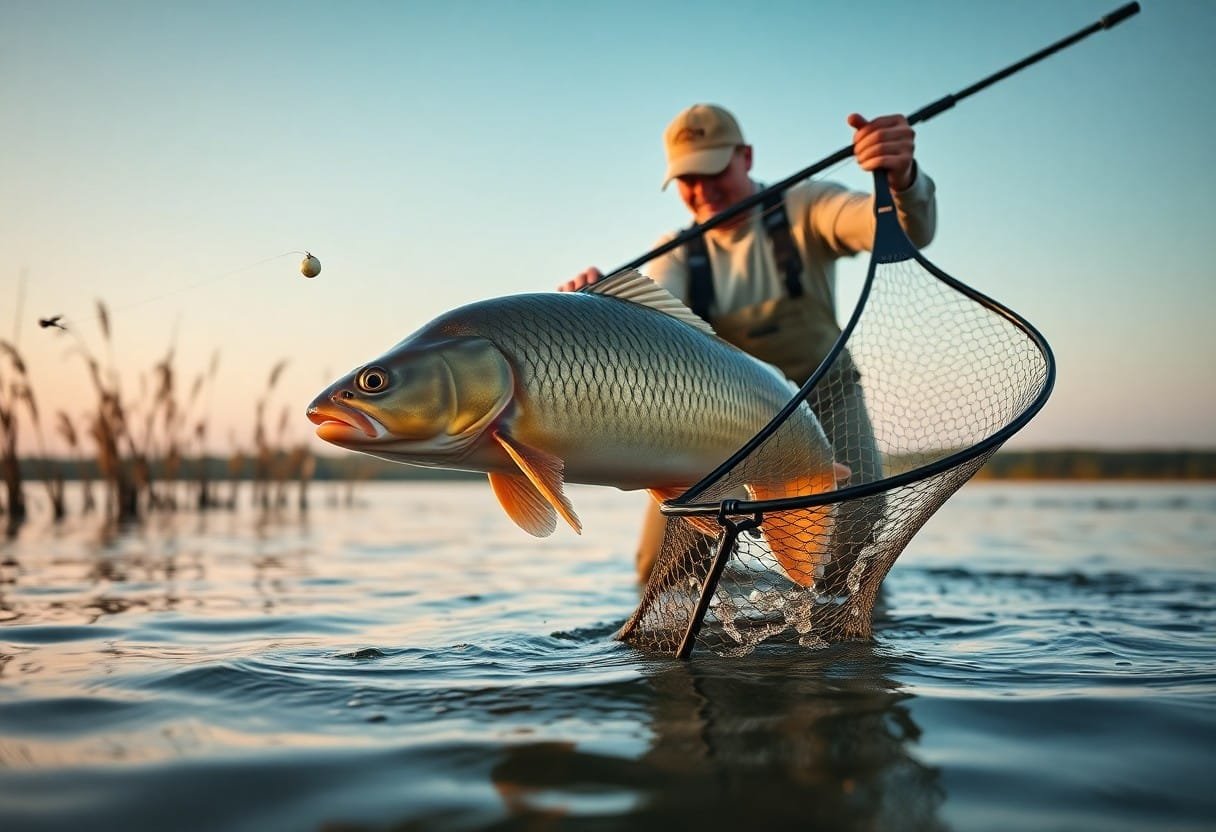
You can trigger explosive surface takes by presenting wafters and floating baits, forcing big summer carp into visible, aggressive feeding; manage high risk of missed hookups with firm setups and light leaders to convert action into trophy catches.
Key Takeaways:
- Surface fishing targets carp feeding on top, increasing the chance of hooking summer giants that roam shallow, warm water.
- Top-feeding carp become bolder in warm months, producing more visible takes and offering high-reward sight fishing.
- Presentation and stealth matter: light lines, small hooks, subtle bait presentation, and quiet approach prevent spooking wary big fish.
- Best baits for surface fishing include crusty bread, dog biscuits, floating pellets, and scented surface baits that mimic natural food.
- Timing and conditions favor early morning, late evening, warm overcast periods, and calm winds when carp confidently feed on the surface.
- Rig and gear choices should prioritize sensitivity and control: float rigs or quiver tips, light knotless leaders, and reliable hooksets for long runs.
- Expect wary fish and false takes; patient observation, adjusting feed density, and quick, confident strikes turn surface sightings into trophy catches.
Understanding Summer Carp Behavior
Summer carp move into warm, oxygen-rich top layers to feed; you should watch for rolls and bubbles as signs. Check community input like How do I catch these giants around my boat, pls help for local tips and surface cues.
Why Large Carp Seek the Upper Layers
Warm surface layers concentrate natural food and oxygen, so you often find big carp grazing there; you can exploit calm conditions and gentle presentations to tempt wary giants without spooking them.
Identifying Prime Surface Feeding Windows
Look for low wind, warming dawns, and insect hatches-these windows make carp bold at the surface; early morning and late evening are your best bets for consistent action.
Monitor water temps around 16-24°C, wind direction, and visible baitfish or insect activity; you should mark weed edges and wind-driven slicks where surface feeding concentrates. Use subtle rigs, short casts, and time setups around dawn and dusk to maximize hookups without alarming the fish.
Essential Gear for Surface Success
You should pack a light rod, high-visibility floats, buoyant baits and a strong net; consult Surface Fishing guides for specialty rigs and use anti-snag gear to protect trophy chances.
Selecting Specialized Controller Floats
Controller floats give you fine control of bait depth and drift; pick sizes for wind and swell, and favor designs with adjustable buoyancy to keep baits visible without spooking wary carp.
The Importance of Buoyant Mainlines and Hooklinks
Buoyant mainlines and hooklinks keep your rig riding high so surface baits sit natural; use low-stretch, high-buoyancy materials and check knots regularly to avoid missed hookups when giants inhale your bait.
Choosing the right buoyant mainline and hooklink means you should prioritize materials that float-braid or specially treated mono-over sinking fluorocarbon; test rigs in a bowl to confirm lift. Match breaking strain to the fish you expect, trim hooklink length to reduce tangles, and add tiny foam near the hook for extra visibility. Use strong knots and inspect for abrasion to prevent line failure when a summer giant rolls.
High-Attractance Surface Bait Strategies
Surface tactics force you to match wind-line and activity; use oily, high-contrast baits and staggered scatter to create persistent rings that draw giant carp.
Optimizing Floating Pellets and Mixes
Adjust pellet buoyancy by pre-soaking or airing; you should mix sizes and flavour-rich binders to maintain a steady patch that tempts wary carp.
Using Liquid Additives to Create Oil Slicks
Use light oils or fish-based liquids to form an attractive oil slick that traps scent and highlights your offering, but apply sparingly since overuse can reduce oxygen.
Place tiny drops of hemp, cod or specially formulated surface oils with a pipette along the wind-line; you can watch the film form rings that concentrate particles and make your hookbait visible. Keep doses minimal, refresh only when needed, and avoid creating scum on still water-low volumes work best and protect fish welfare.
Precision Presentation and Casting Techniques
Presentation demands micro-adjustments: you soften your cast, trim leaders, and present single, subtle baits so wary summer giants feed naturally without detecting line or splash.
Mastering Stealthy Approaches to the Margin
Approach the margin quietly: you move low, avoid casting shadows, and keep tackle noise minimal so feeding carp remain undisturbed; soft footsteps and slow movements increase hookup chances.
Avoiding Spooking Fish with Distant Casting
Cast with a gentle, controlled arc so you use soft lead releases and steady spool control to ensure baits land beyond visible fish, reducing the risk of spooking warier summer giants.
Distance demands practiced technique: you refine rod action, spool pressure, and wind reading to place rigs precisely without splash. Use braided main with a fluorocarbon leader, pre-weighted leads with soft release, and a controlled backlift to avoid line slap. Small errors cause major spooks, so focus on quiet drop and accurate long-range placement.
Managing the Take and Fighting Heavy Fish
Practice holding line pressure early so when a giant takes, you can delay the strike by a split second and let the bait settle, then drive the hook hard while using your rod butt to absorb runs and avoid line break.
Perfecting the Timing of the Strike
Watch mouth movement and hold until you feel a decisive pull, then strike sharply to secure deep penetration and give you control of the fish’s initial run, reducing lost fish.
Controlling Giants in Weedy Summer Conditions
Anchor your stance and keep constant, measured pressure to prevent roots and weed snagging; pair a long leader with strong hooks and pull fish sideways out of cover to minimize snap-off risks.
Use braided mainline or a heavy mono shockleader so you can apply sustained pressure, keeping the rod tip high to lift fish clear of weed. Keep measured spool control and allow short, controlled runs to tire them, then guide into open water and land with a long-handled net to prevent losing giants in thick vegetation.
Overcoming Environmental Obstacles
Water clarity, temperature shifts and surface motion force you to alter presentation, bait size and timing; mastering these variables keeps you on the trail of summer giants despite shifting conditions.
Deterring Bird Life and Nuisance Species
Birds and grebes often pick off surface baits; you should use stealthy casts, tight presentations and simple decoy rigs to minimize bait theft and maintain carp interest.
Adapting to Wind Drift and Surface Ripple
Wind-driven drift and ripples change bait presentation; you must angle casts, shorten lines and match float weight so the rig sits naturally and avoids spooking big carp.
Practice casting into the lee, place a small backlead to steady the line, and trim float buoyancy until the bait tracks true; you should employ subtle mends and short leaders to prevent line drag and reduce missed strikes. When wind peaks, switch to a heavier float or sinker so you keep a natural presentation and maintain contact with cautious giants.
Final Words
Drawing together the evidence, you can use surface carp fishing to target summer giants by reading conditions, choosing bold topwater baits, and timing your sessions for low-light periods; mastering presentation and patience raises your odds of landing trophy carp.
FAQ
Q: Can surface carp fishing be the key to catching summer giants?
A: Surface fishing can unlock bites from large carp during warm months because big carp often cruise topwater to feed on insects, floating baits, and surface scum when water is warm and oxygen-rich. Success depends on correct bait choice, stealthy approach, precise casting, and timing; a well-prepared surface session can outfish traditional bottom tactics on many summer days.
Q: What bait choices work best for targeting giants on the surface?
A: Floating bread in pinched or crust form remains the most reliable option, with expanded dog biscuits, foam pop-ups, and specially formulated floating pellets as excellent alternatives. Scent boosts like fish oil or anise should be used sparingly to avoid spooking wary carp. Size and texture matter: offer a natural-looking flake or small bundle on a hair so the carp can suck and hold the bait without feeling resistance.
Q: Which rigs and hook types are most effective for surface carp?
A: Simple hair rigs with a short, stiff boom or a small Gomoku-style surface rig give the best presentation. Use a sharp curved-shank or wide-gape hook in sizes 4-8 for large carp; reduce hook visibility with a thin, dark leader (15-20 lb braid or 10-15 lb fluorocarbon). Fix the bait so it sits naturally on the surface with a minimal exposed hook point to encourage a full mouthful before the hook sets.
Q: What rod, line, and reel setup should I use for summer surface giants?
A: Choose a responsive rod of 10-12 ft for accurate long casts and good hook control; a moderate-fast action helps fight powerful carp. Use a reel with smooth drag and 150-200 m capacity. Mainline of 10-15 lb braid or coated braid gives low stretch and sensitivity; add a 1-2 m 10-15 lb fluorocarbon leader for abrasion resistance and lower visibility. Match hooklink strength to water pressure and fish size to avoid break-offs.
Q: How do I spot and present to cruising or rolling carp without spooking them?
A: Scan margins, open water for rolling patches, and weed edges during low wind; look for consistent rolling patterns or schooling. Approach quietly, casting ahead of the fish’s path and allowing bait to land naturally. Introduce small amounts of loose feed to create interest but avoid heavy feeding that spooks or conditions fish. Keep movement slow, avoid shadows over the water, and use long, light casts to keep distance.
Q: What strike and hookup technique works best for surface takes from big carp?
A: Watch the carp’s behavior closely; many surface takes are subtle sipping or gentle pushes before a full take. Allow the fish to take and turn with the bait for a split second, then sweep the rod smoothly and positively to drive the hook home-avoid lunging sets that may pull small hooks free. Adjust drag to let the fish run but maintain enough pressure to keep the line clear of surface obstructions.
Q: When should I switch from surface tactics to bottom fishing during summer sessions?
A: Switch after a sustained period with visible carp but no consistent takes, when wind picks up and surface action dies, or when late-evening and pre-dawn windows reduce surface feeding. Also change tactics if carp become skittish from repeated presentations. Bottom rigs with buoyant hookbaits or marginal presentations often excel when surface opportunities fade, especially around weed edges and boil lines.