
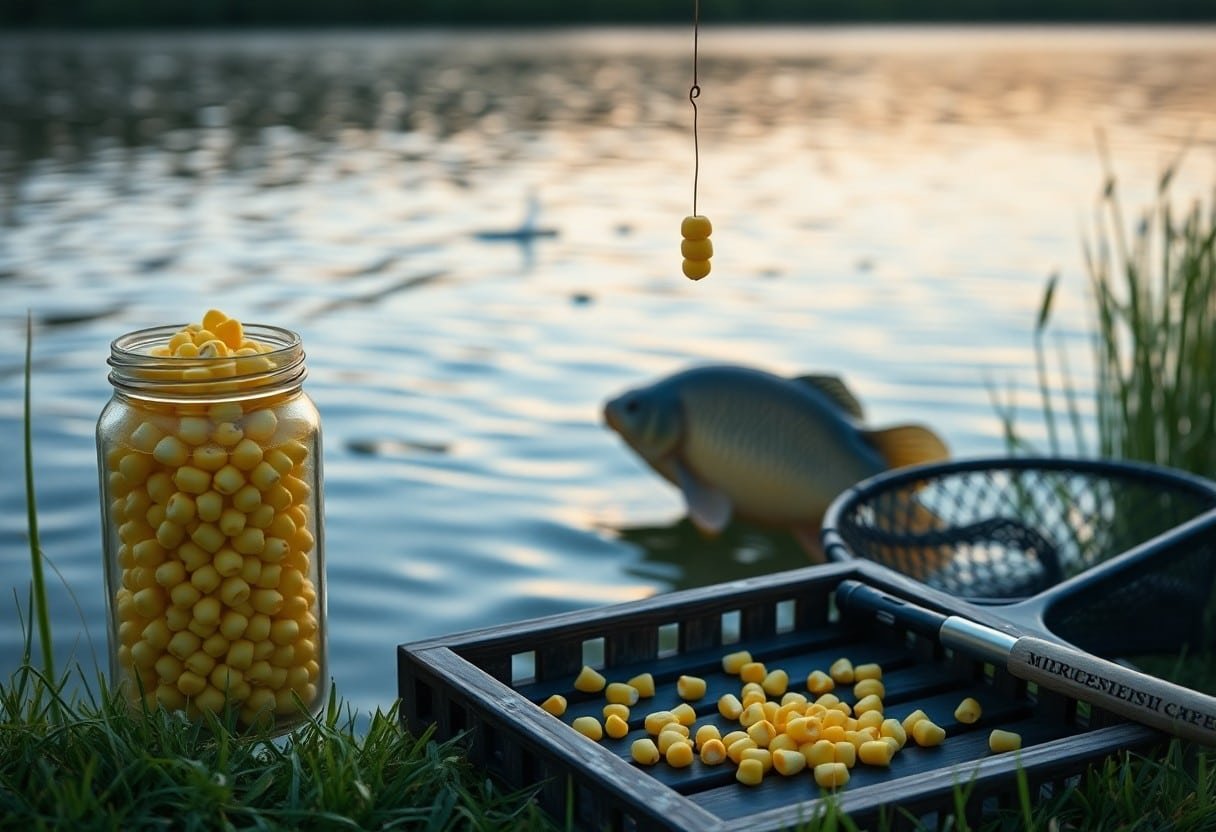
With sweetcorn’s bright scent and colour, you can attract carp reliably, but overuse can spook fish or upset their diet. Cost-effective and easy to store, it still ranks among the most practical baits.
Key Takeaways:
- Sweetcorn remains one of the most effective carp baits because its bright colour, sweet scent and high carbohydrate content attract feeding carp.
- Whole kernels are versatile: they work on hair rigs, in feeders, or mixed into particle groundbaits.
- Seasonal performance peaks in warmer months when carp favour plant-based food, though corn can still produce bites year-round with the right presentation.
- Canned corn is inexpensive, shelf-stable and easy to store, making it a practical staple for many anglers.
- Repeated use at the same water can create bait-shy carp; rotate with boilies, pellets or natural baits to maintain effectiveness.
- Treating kernels with oils or flavours and matching kernel size to carp mouth size improves hookbait retention and attraction.
- Adjust rig setup and sink rate-dry corn for PVA use or present on a hair rig with a bead/stopper-to optimise presentation.
The Visual and Olfactory Appeal of Sweetcorn
Sweetcorn catches attention visually and by scent, so you get an edge when targeting carp in mixed waters. The bright yellow offers high visibility, while the sweet aroma and fermenting sugars release strong olfactory cues that carp readily follow, increasing your chances of a confident, quick take.
High Visibility and Color Contrast in Murky Water
Yellow kernels stand out in low visibility, so you can present a clear, visible target that carp will spot from distance. You should pair sweetcorn with contrasting rigs or a single kernel hookbait to maximize visual attraction and reduce missed takes in muddy or stained conditions.
The Role of Natural Sugars and Amino Acids in Attraction
Sugars and amino acids in sweetcorn trigger feeding responses, so you’ll notice carp investigating baits more persistently. You can exploit these chemical cues by using soaked or slightly fermented corn to boost odor plume and increase hooking opportunities during colder or low-activity periods.
Fermentation amplifies sweetcorn’s appeal by releasing extra amino acids and sugars, so you should prepare baits that produce a steady scent trail; soaked or lightly fermented corn creates a broader plume and longer attraction window. Beware that excessive free offerings can spoil hookbaits and train carp to nibble, so balance attraction with careful baiting to protect catch rates.
Strategic Advantages in Modern Carp Angling
Sweetcorn gives you immediate attraction and easy presentation, prompting fast acceptance from carp while you adjust tactics; its colour and scent work alongside pellets or boilies to keep fish feeding without complex rigs.
Immediate Acceptance and Lack of Pre-baiting Requirements
Carp often take sweetcorn quickly, so you can fish on the spot without lengthy pre-baiting; this gives you flexibility and instant results when time or access is limited.
Cost-Effectiveness for Large-Scale Baiting Campaigns
Budget-friendly sweetcorn lets you bait large areas without breaking the bank; you can pour bulk amounts to build feeding zones while keeping costs low and maintaining consistent bait density to attract roaming carp.
When you plan large-scale baiting, buying tinned or frozen sweetcorn in bulk slashes the per-unit cost and keeps sessions running without constant resupply. You should store it correctly to avoid spoilage and mix corn with cheaper carriers like maize or pellets to stretch quantity. Watch out for overfeeding, which reduces activity; aim for low-cost, consistent coverage to maximise catches and minimise waste.
Versatility in Rigging and Presentation
Sweetcorn adapts to many rigs, letting you present a single grain on a hair, a buoyant pop-up hybrid, or a string of kernels for bulk attraction; use it to balance visibility and subtlety, and note that corn’s flexibility suits changing conditions and angling styles.
Effective Use of Hair Rigs and Multiple Grains
You can thread two or three grains onto the hair or mix sweetcorn with maize and hemp to create bulk; hair rigs keep the hook free while multiple grains increase attraction without compromising hook hold.
Tipping Boilies with Corn for Increased Visual Stimuli
Try tipping a boilie with a bright kernel to add contrast and flash; the extra visual stimulus draws curious carp in murky water while the boilie preserves hook security and presentation.
Tipping boilies with corn is simple: glue a kernel, use a micro-boilie or hair loop; you should match size and scent so the corn complements, not overwhelms, and watch out because flocks of birds and carp gorging on free corn can spoil a swim.
Is Sweetcorn Still One Of The Best Baits For Carp Fishing?
Seasonal water temperatures alter sweetcorn’s appeal; you should favour it in cooler months for slower digestion while warmer water increases breakdown, so adjust presentation and amount. See angler opinions: Is sweetcorn a good bait? I’ve never catched anything on it.
Seasonal Breakdown
| Season | Effect on Sweetcorn |
|---|---|
| Winter | Slower digestion, higher persistence, lower breakdown |
| Summer | Faster saturation, stronger aroma, increased bait loss |
High Digestibility During Cold Water Winter Sessions
During winter you benefit from sweetcorn’s high digestibility, so carp process it slowly and remain interested; you should use modest amounts and avoid overfeeding to keep hookbaits appealing.
Managing Bait Breakdown and Saturation in Summer
Summer intensifies bait saturation and aroma; you must refresh hookbaits frequently and prefer soaked or treated kernels to prevent rapid desaturation that deters wary carp.
Rotate your approach by using pre-soaked or oil-coated kernels, storing hookbaits in airtight containers to slow saturation, and switching to PVA-friendly presentations; you can also stagger baiting intervals and use smaller, firmer hookbaits to reduce breakdown and maintain natural appeal.
Mitigating Common Challenges on the Bank
Tactics on the bank should help you protect bait, prevent line tangles and cut down on small fish interference so you avoid lost hookups and wasted sessions.
Strategies for Deterring Small Nuisance Fish
Use baiting patterns, tight presentation and selective hook sizes so you keep small fish at bay; pairing sweetcorn with heavier rigs reduces nuisance strikes and preserves your bait.
Utilizing Artificial Corn for Enhanced Hook-Hold Durability
Switch to high-density artificial corn so you maintain shape, resist pecking and secure a more consistent hook-hold, giving you better control over fragile bites.
Artificial corn comes in foam, plastic and wax blends; you can thread it, glue it or pop it on a hair rig, adjusting buoyancy to match presentation. You’ll find it resists pecking and keeps shape during long sessions, reducing missed strikes and lost fish. Test stiffness and color to mimic real kernels and avoid overly buoyant variants that pull rigs off the bottom.
Advanced Customization and Boosting
You can tweak sweetcorn with oils, flavors and controlled fermentation to boost attraction; test proportions and avoid overusing strong additives that can repel carp. See community results: Is sweetcorn effective for carp fishing?
- Test single additives at a time and log results.
- Start with minimal doses and increase gradually.
- Use sticky carriers to retain flavor on kernels.
Table: Additive Effects
| Additive | Effect |
|---|---|
| Oils | Longer scent trail, can stain hooks |
| Sugars | Fuel for fermentation, boosts sweetness |
| Amino baits | Increases feeding response |
| Artificial flavors | High potency but may mask natural bait |
Enhancing Attraction via Liquid Additives and Flavors
Try adding small doses of sweet or savory liquid attractors to your corn; keep amounts minimal so the scent trail attracts without masking natural bait, and use sticky carriers to hold flavor longer on kernels.
Fermentation Techniques to Increase Potency
Fermenting corn increases amino acids and scent; you should soak in warm, low-oxygen conditions for 3-7 days, stirring daily and monitoring smell. Use caution: strong ferments can attract unwanted species-adjust dilution accordingly.
Experimentation with batch size, temperature (around 18-25°C), sugar ratios and airflow helps you find a repeatable protocol; label jars, vent gases, refrigerate finished bait, and discard any batch with foul or chemical odors to avoid attracting predators or contaminating water access points.
Summing up
Now you can still rely on sweetcorn as one of the best baits for carp fishing because its colour, scent and accessibility attract carp; adapt size and presentation to local conditions and combine with boilies or pellets when needed to increase catch rates.
FAQ
Q: Is Sweetcorn Still One Of The Best Baits For Carp Fishing?
A: Sweetcorn remains one of the most widely used carp baits because its bright colour, sweet taste and soft texture attract a wide range of fish. Low cost and easy availability make it ideal for long sessions and quick baiting. Performance varies by venue and angler approach, with specialist baits like boilies sometimes out-performing corn in heavily pressured waters.
Q: When is sweetcorn most effective?
A: Warm water and active feeding times increase take rates, making spring through early autumn prime months for corn. Shallow margins, clear bays and spots with visible feeding activity tend to produce more interest. Lakes with little natural maize or where other anglers use corn often show faster responses due to local preference.
Q: What are the main advantages and disadvantages of using sweetcorn?
A: Advantages include low cost, high visibility, quick attraction and simple presentation on a hair rig. Small kernel size allows multiple baits per session and easy hook-ups for short-term tactics. Disadvantages include quick rejection by carp accustomed to larger baits, vulnerability to theft by small fish, and reduced performance in very cold water when carp cut down feeding.
Q: How should sweetcorn be presented to maximise hookups?
A: Thread kernels onto a hair using a loop or small bait band so the corn sits just off the hook for natural presentation. Use a size 6-10 hook with a short hooklink to keep the bait tidy and reduce tangles. Add a small foam pop-up on weedy or silty bottoms to lift the corn above debris and improve hooking angles. Check rigs frequently because soft corn can slip or be stripped between casts.
Q: Is tinned, fresh or flavoured corn best?
A: Tinned sweetcorn is the most practical choice because it is ready to use, retains oils that attract carp and stores easily. Fresh boiled corn offers firmer texture but needs preparation and can spoil during long sessions. Flavoured or brined corn can boost attraction in some waters, but excessive flavouring masks natural sweetness and can deter wary fish.
Q: Will frequent use of sweetcorn condition carp and affect future sessions?
A: Carp learn food sources and repeated feeding with corn can create local preference, drawing fish back to baited spots. Heavy particle baiting with corn may make carp short-baited for larger, nutrient-rich baits unless anglers switch tactics carefully. Rotating baits and using measured pre-baiting reduces strong single-bait conditioning.
Q: What practical tips improve success with sweetcorn today?
A: Pre-bait small, visible spots to concentrate fish rather than blanketing large areas. Mix corn with other particles like hemp or crushed pellets to add scent and slow feeding rates. Use bright yellow kernels for visibility, avoid overloading the hair to keep a natural presentation and trial-test spots with control baits to confirm carp preference before committing a session.