
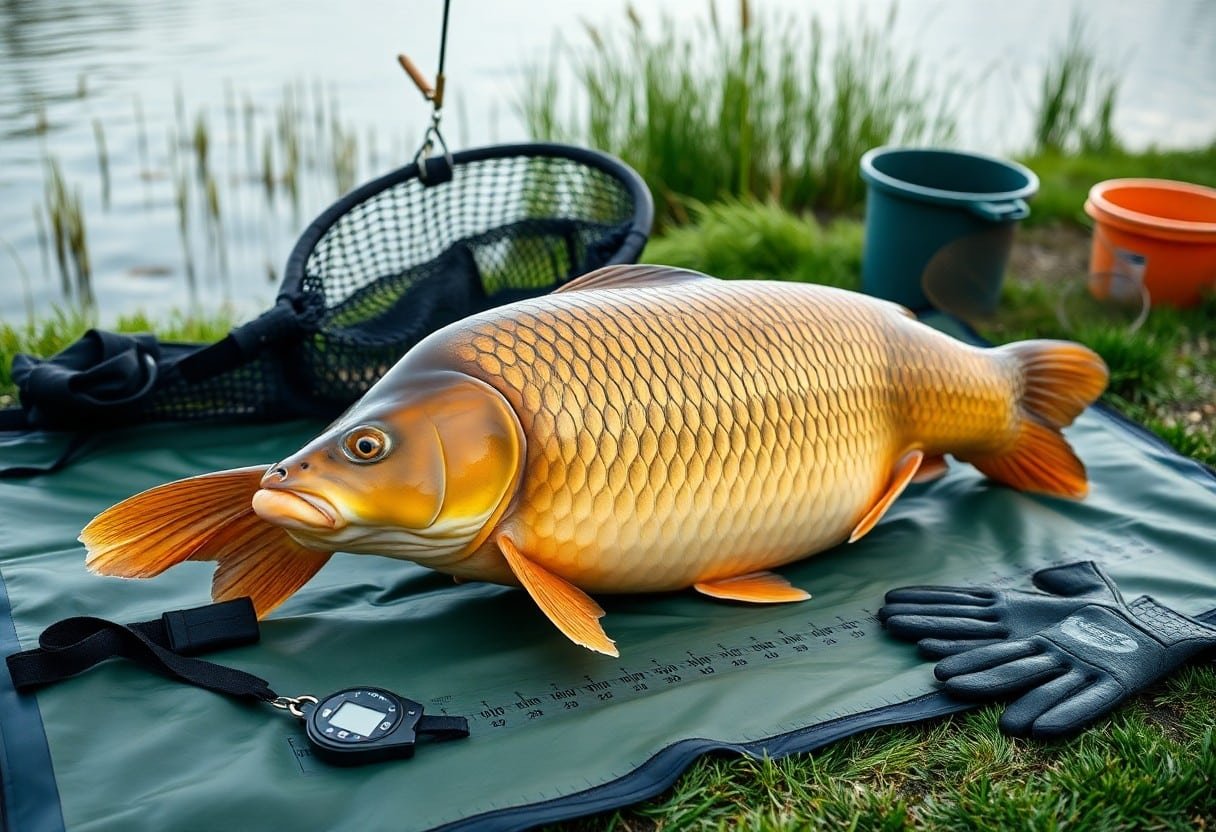
Over your next carp session you can improve survival and catch quality by using proper care equipment, which will reduce mortality, prevent hook injuries, and promote healthier catches; see Carp Care Basics.
Key Takeaways:
- Proper landing nets and unhooking mats reduce scale and slime damage, increasing carp survival after release.
- Soft, knotless mesh nets and padded slings prevent fin and skin tears during handling and weighing.
- Shorter out-of-water time achieved with quick-access unhooking kits and easy-to-read scales reduces stress and mortality.
- Accurate digital scales and stable weigh slings allow precise measurements without prolonged handling.
- Washable, non-absorbent mats and cleanable gear cut cross-contamination risk and lower infection rates.
- Carp-specific tools such as long-nose forceps, disgorger tools, and thin neoprene gloves improve safe hook removal and reduce injury.
- Consistent use of fish-friendly equipment supports healthy fisheries, better catch-and-release results, and a stronger angler reputation.
How Can Proper Fish Care Equipment Improve Your Carp Fishing Experience?
Unhooking mats and cradles give you a padded, wet surface that supports carp and reduces abrasions and internal stress during handling, improving survival and catch quality.
- Soft, water-retaining materials to protect scales.
- Deep cradles for spine support during weighing.
- Drainage and quick-clean features to limit bacterial growth.
| Feature | Benefit |
|---|---|
| Padding and wettable fabric | Minimizes skin damage |
| Contoured cradles | Reduces spinal pressure |
| Easy-clean surfaces | Lowers infection risk |
Minimizing Physical Impact and Internal Stress
Reducing pressure points by using a cradle helps you keep carp aligned, limit spine strain and shorten handling time, which lowers the risk of internal injury.
Preserving the Essential Protective Slime Layer
Protecting the slime layer requires you to keep mats wet, limit air exposure and avoid rough surfaces to prevent infection.
When you rinse mats and cradle liners after each use, keep them damp during unhooking and choose soft, non‑abrasive fabrics so you preserve the mucus barrier and lower post-release infection rates for healthier carp.
High-Quality Landing Nets and Handling
Quality landing nets with wide frames and soft, knotless mesh let you secure carp quickly while minimizing stress and scale loss; you protect fish and preserve future catches by using padded rims and deep, flexible mesh.
Advantages of Large-Frame Knotless Mesh
Large-frame knotless mesh reduces hook snagging and lets you cradle big carp safely, lowering your risk of torn fins and skin; knotless nets also cut handling time so you can release fish faster.
Safe Extraction Techniques to Prevent Fin Damage
When unhooking, cradle the carp on a wet mat, support the belly, and use barbless or micro-barb tools to avoid tearing fins; always keep the fish low and wet to prevent scale loss and shock.
Use long-nose forceps for deep hooks, or cut line when removal would risk further injury; by tilting the net to keep the carp steady you reduce the chance of severe fin tears and speed recovery before release.
Weigh Slings and Temporary Retention
Using a padded weigh sling keeps carp safe during handling; you reduce scale damage and spinal stress while you photograph or weigh fish. See community advice at Respectful carp care tips for anglers. Always choose wet, well-sized slings and avoid leaving fish unsupported.
Providing Full Body Support During the Weigh-In
Support the carp’s weight evenly during the weigh-in by cradling it in a wet, padded sling; you protect the spine and gill area with full-body support and reduce handling injuries.
Best Practices for Safe Short-Term Recovery
Allow carp to rest in shallow, oxygenated sling water while you monitor breathing; you should limit time out of water to under 60 seconds and avoid overcrowding the retention area.
Aftercare includes gently massaging the flanks to encourage circulation, matching sling water temperature to the lake, and using an aerated recovery cradle when possible. You must watch for distress signs-gaping, erratic movement, or slow gill beats-and delay release until the carp shows strong, regular swims; prioritize oxygenation and minimal handling to ensure safe recovery.
Clinical Care and Antiseptic Treatments
Clinical routines and a compact antiseptic kit let you treat wounds quickly, calm carp, and reduce infection risk. Carry sterile dressings, diluted povidone-iodine or fish-safe disinfectant, and nitrile gloves to clean and protect injuries before fast, careful release.
Treating Hook Holds and Pre-existing Wounds
Carefully remove visible hooks when safe, but for deep hook holds cut the line and seek professional help. You should flush wounds with sterile saline and apply a small antiseptic dressing to lower tissue damage and avoid prolonged handling.
Reducing Post-Capture Infection Risks
Keeping nets and mats disinfected between catches stops pathogen transfer. Rinse gear, treat bloody or slimed areas with a fish-safe disinfectant, and replace contaminated towels to cut post-capture infection chances.
Monitor treated carp for sluggishness, appetite loss, or spreading lesions after release; those signs indicate bacterial infection or deeper tissue damage. You should reapply antiseptic within 24-48 hours if wounds stay open and consult a vet for persistent problems. Using salt dips, clean freshwater rinses, and single-use disposables reduces cross-contamination and improves recovery odds.
Hydration Management on the Bank
Hydration on the bank means you keep carp moist during handling to reduce stress and gill damage; apply water regularly and use wet mats. Consistent moisture prevents tissue damage and reduces mortality.
The Importance of Constant Water Application
Keeping a spray or sponge ready lets you mist gills and skin quickly after landing; this reduces stress and bacterial risk and improves fish recovery.
Utilizing Collapsible Buckets for Efficiency
Collapsible buckets let you store water close to the bank, refill quickly, and pour without fuss; keep one dedicated for fish care and avoid cross-contamination.
Positioning collapsible buckets within arm’s reach lets you top up sponges and pour quickly; choose food-grade, puncture-resistant models with lids to reduce debris and spillage. Keep two buckets-one for fresh water and one for treatment-to prevent cross-contamination. Check water temperature before using it on fish and rinse nets between uses to limit infection risk.
The Angler’s Ethical Responsibility
You must choose and use correct tackle to protect fish welfare and reduce injury; barbless hooks, padded mats and quick-release tools lower stress, decrease post-release mortality and help you avoid legal penalties for negligent handling.
Promoting Long-Term Fishery Sustainability
Sustainable rig and handling reduce gear-related deaths so you keep sustainable stocks; using circle hooks, disinfecting nets and observing size limits cuts spread of diseased fish and lessens pressure from overfishing.
Enhancing Personal Satisfaction Through Conservation
Conservation-focused gear choices let you fish confidently while supporting healthy fisheries; gentle unhooking, minimal air exposure and correct weighing raise your enjoyment and protect future access to prime waters.
Practicing consistent, fish-first routines enhances your satisfaction and outcomes: you reduce time out of water with quick-release rigs, treat deep-hooking by cutting line and seeking expert advice, and disinfect equipment to limit infection. These steps increase survival rates, preserve healthy populations and build genuine personal pride in responsible angling.
Summing up
As a reminder, choosing quality mats, welfare-friendly nets, temperature monitors and correct bait storage protects carp health, simplifies handling, improves catch rates and lets you fish with confidence while complying with best practices.
FAQ
Q: Why is an unhooking mat important for carp fishing?
A: An unhooking mat provides a soft, damp surface that protects a carp’s scales and slime coat during handling. Place the mat on level ground and keep it wet to prevent abrasive contact. Using the mat reduces injuries from rough surfaces and lowers post-release mortality by minimizing stress and damage. Many fisheries require a mat for catch-and-release, so the mat also helps you follow local rules and fish responsibly.
Q: How do landing nets and knotless mesh improve fish welfare?
A: A wide, deep landing net with knotless mesh supports the fish evenly and avoids tangling hooks or fins. Scoop the carp with a horizontal approach to keep it calm and reduce thrashing. Knotless mesh prevents scale loss and tears to the skin that can lead to infections. Choosing the right net size for carp helps you land fish more quickly and safely, which shortens handling time.
Q: What benefits do weigh slings and digital scales bring to carp fishing?
A: A purpose-made weigh sling cradles the carp’s body and disperses pressure during weighing, reducing stress on internal organs. Use a reliable digital scale and zero it before weighing to get accurate measurements. Keeping the fish in the sling close to the water and returning it promptly after weighing minimizes air exposure. Accurate records help track progress and support conservation-minded angling practices.
Q: Which unhooking tools are best and how do they speed up safe handling?
A: Long-nosed forceps, hook removers, and split-ring pliers allow rapid removal of hooks without excessive hand contact. Use barbless or flattened barbs where permitted to make unhooking quicker and less traumatic. Cutting tools for deeply swallowed hooks let you remove or shorten hook points without prolonged struggle. Fast, confident use of these tools keeps fish out of the water for less time and reduces injury risk.
Q: How do water buckets, revival pumps, and wet towels support fish recovery?
A: A water bucket or dedicated revival sling lets you keep carp hydrated and orientated while preparing for release. A gentle revival pump moves water across the gills to restore breathing after a long fight. Wet towels or soft, water-soaked slings protect the slime coat during handling and when posing for photos. Using these items together increases the carp’s chance of a full recovery and safe return to the lake.
Q: What role does proper handling technique play alongside the equipment?
A: Correct handling starts with wet hands and minimal contact, supporting the carp under the belly and near the pectoral area rather than squeezing the gill region. Organize your kit so tools are within arm’s reach to avoid unnecessary movement and delays. Limiting air exposure and keeping handling brief reduces stress and the likelihood of hook-related injuries. Skilled handling combined with the right gear produces better outcomes for both fish and angler.
Q: Which additional items and practices improve the overall carp fishing experience?
A: Keep a fish-care station with pre-rigged weigh slings, disinfectant for equipment, spare mats, and a headlamp for night work. Follow local rules about weighing and photographing fish and use quick-release camera setups to shorten handling time. Inspect and maintain equipment regularly to ensure nets, slings, and scales remain clean and functional. Consistent use of proper gear and routines improves catch-and-release success and makes sessions more productive and enjoyable.