
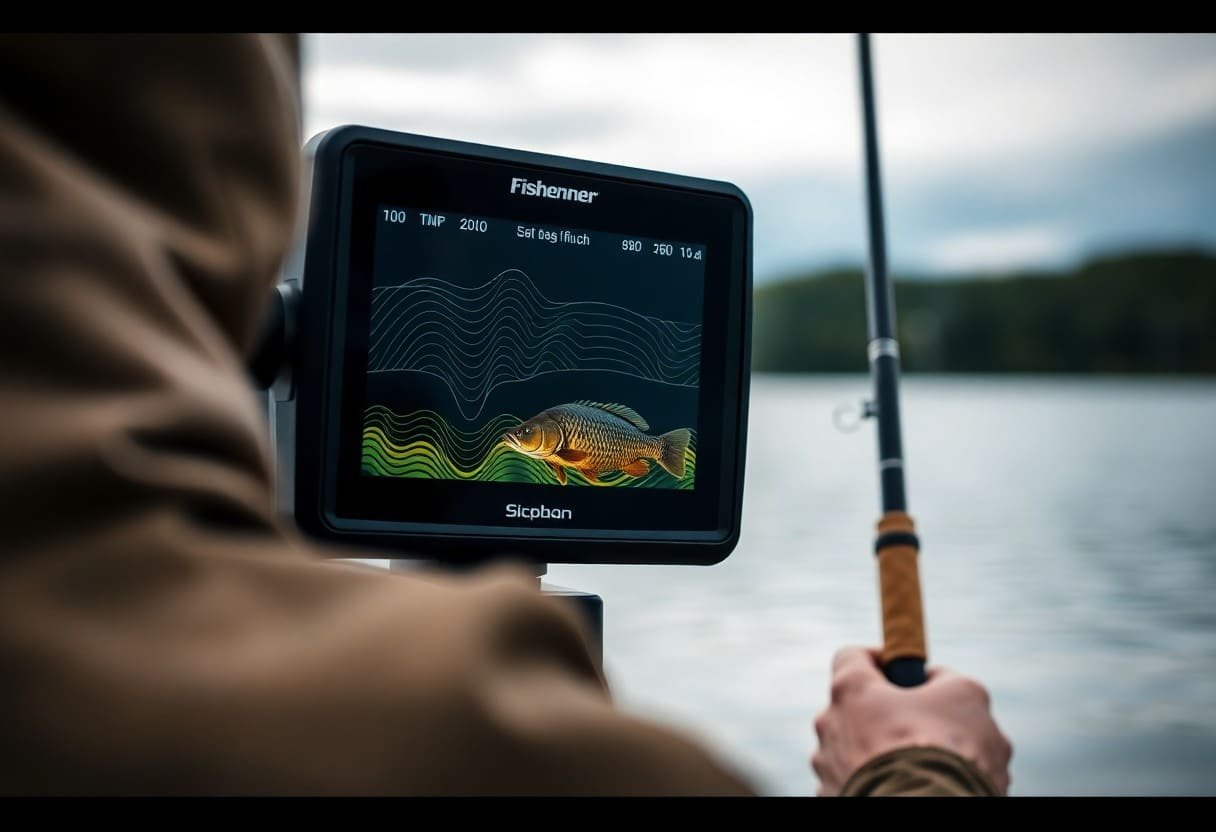
Many anglers rely on digital fish finders to pinpoint carp, giving you depth, structure and target ID; higher catch rates and a risk of disturbing stocks reshape how you fish with data-driven precision.
Key Takeaways:
- Digital fish finders increase carp detection by mapping depth, structure, and sonar targets in real time.
- High-frequency imaging and side-scan views reveal bait, weedbeds, and target size, improving bait placement and hookup decisions.
- Water temperature, depth, and bottom profile data help identify carp activity zones and tailor fishing tactics.
- Overreliance on electronics can raise fishing pressure and reduce success unless anglers combine tech with traditional observation and stealth.
- Cost and feature differences create a learning curve; entry-level units suit beginners while advanced systems demand interpretation skills.
- False echoes from vegetation, debris, or surface clutter can mislead users; reading raw sonar and corroborating with visual checks remains necessary.
- Conservation-minded use and adherence to local rules limit disturbance and support sustainable carp populations.
The Technological Shift in Specimen Carp Angling
Specimen anglers are adopting digital tools fast; you can consult The Beginner’s Guide to High-Tech Carp Fishing (2026 …) while using real-time sonar to read depth, bait, and structure for smarter sessions.
From traditional marker floats to sonar visualization
Marker floats gave you basic depth clues, but you now rely on sonar visualization to identify contours, drop-offs, and holding areas with far greater confidence.
The emergence of castable and portable units
Castable units put advanced sonar in your hands, letting you scout bays and margins quickly; you gain mobile accuracy without lugging heavy gear, speeding up productive sessions.
You can choose between castable sonar, portable transducers, and wireless modules; castables probe distant margins while portables provide continuous on-bank scanning. Expect trade-offs: shorter range and battery limits versus boat systems, and noisy casts can spook wary carp. Calibrate sensitivity, map returns before baiting, and pair units with a bank-side tablet for clear overlays.
Decoding the Underwater Topography
You read bathymetric contours to locate drop-offs, flats and ledges; pairing sonar with mobile overlays improves targeting – see The Role of Mobile Apps in Enhancing the Performance …. Mark sharp contour changes as prime carp staging zones.
Identifying substrate transitions and hard spots
Use side-scan and bottom-lock to detect abrupt substrate shifts and hard spots where carp graze; drop markers to revisit productive lies.
Locating weed beds and submerged snags
Spot weed beds as patchy, low-echo zones and snags as bright, spiky returns; mark both to avoid gear loss and to target feeding areas.
Observe sonar across frequencies: lower bands reveal deep contours while higher bands resolve weed structure and individual snags. Reduce gain to separate vegetation from rock, sweep slowly and flag waypoints where you note dense weed or sharp returns. Expect seasonal shifts and treat flagged snags as high-risk spots for tackle, approaching with angled rigs and cautious retrieves.
Precision Mapping and Feature Identification
You create detailed underwater maps that expose deep drop-offs, weedbeds and submerged structure, so you focus casts where carp gather and avoid dangerous snags, boosting catch rates.
Utilizing bathymetric charts for long-term strategy
Bathymetric charts let you plan seasons ahead by revealing depth contours and persistent holding zones, guiding where to pre-bait and when to fish.
Pinpointing patrol routes and intercept points
Sonar helps you trace carp patrol routes and mark intercept points, so you time approaches to ambush moving fish and reduce wasted casts.
Detailed analysis of tracklines and speed readings lets you identify peak transit times and consistent lanes; you can set rigs where carp regularly cross. This minimizes blind-casting and highlights high-probability ambush spots, while warning you about pressure-sensitive areas that may shift under angling pressure.
Real-Time Analysis of Carp Behavior
Real-time sonar lets you watch carp feeding and schooling patterns so you can adjust bait and presentation on the spot; instant behavioral cues reduce wasted time and increase catches.
Distinguishing target fish from nuisance species
Sonar signatures let you separate carp from bream or tench by size, shape and movement; you can avoid false targets and focus on the largest specimens.
Monitoring depth preferences and thermoclines
Thermoclines reveal layers where carp concentrate, so you can place rigs at depths matching their preference and avoid unproductive zones.
Layered temperature and depth charts let you track daily and seasonal shifts, spot suspended fish near breaks, and time baiting to match feeding windows; using high-resolution profiles prevents wasted casts and exposes hidden hotspots you might otherwise miss.
Operational Efficiency for the Modern Angler
Using digital fish finders, you compress scouting time, spot carp schools faster, and reduce guesswork, while watching for battery drain and false returns that can cost casts.
Optimizing short sessions with rapid data acquisition
Short sessions force you to act fast; rapid sonar updates and instant depth reads let you pick targets quickly, but monitor signal noise to avoid wasted casts.
Integrating smartphone GPS for pinpoint accuracy
Smartphone GPS pairs with your finder so you mark hot spots, revisit productive contours, and share waypoints; trust pinpoint accuracy while watching for signal loss near heavy cover.
Pairing your phone with a finder gives you live maps, breadcrumb trails, and automatic waypoint logging so you return to exact baited spots. You can overlay bathymetry, set geofences for safety, and sync tracks to cloud apps. Keep an eye on phone battery and signal dropouts that can misplace saved locations.
The Intersection of Ethics and Watercraft
Consider how watercraft-mounted finders force you to weigh convenience against conservation: overuse can spook fish and degrade habitats, while prudent use improves catch success and supports science-driven management.
Maintaining traditional skills in a digital era
Tradition keeps your rod-handling, line-reading, and patience sharp even with screens; practice manual tracking and observation so electronics augment rather than replace core angling instincts.
The debate over fair chase and technological aid
Debate centers on whether you gain an unfair advantage that undermines sportsmanship or whether tech enhances safety and useful conservation data.
You should weigh legal limits, club rules, and local norms before using finders; misuse can cause ethical breaches and attract regulatory penalties, whereas measured deployment offers conservation benefits through habitat mapping-set personal limits, log electronic use, and keep sharpening traditional techniques so technology complements skill rather than replacing it.
Summing up
To wrap up, you can use digital fish finders to gain precise depth, fish location, and bottom detail, giving you faster, data-driven decisions on where and how to present bait while preserving your traditional carp-fishing skills.
FAQ
Q: What are digital fish finders and how do they work for carp fishing?
A: Digital fish finders are electronic sonar devices that send sound pulses into the water and display returns as fish, structure, and bottom contours on a screen. A transducer attached to a bank stick, boat, or castable unit emits and receives those pulses, while onboard processors translate signal strength and timing into visual marks. Advanced units use CHIRP, down imaging, and side imaging to deliver clearer targets and fine detail around weedbeds, bars, and submerged features. Many models include GPS and mapping to record waypoints, mark swim locations, and replay search tracks.
Q: Are fish finders actually changing carp angling success rates?
A: Fish finders improve situational awareness by showing where carp hold, which increases the chance of presenting bait to active fish. Anglers who pair finder readings with correct baiting, rig choice, and presentation often see higher hookup rates than those guessing blind. Technology does not guarantee catches; reading profiles, timing, and experience still determine consistent success. Controlled trials and angler reports show measurable gains on complex waters where structure and depth vary.
Q: Can a fish finder replace traditional carp fishing skills and techniques?
A: A fish finder supplements rather than replaces angling skills such as bait selection, rig trimming, and reading surface signs. Tackle handling, timely hooksets, and understanding carp behaviour remain crucial when a target is located on screen. Overreliance on electronics can reduce attention to bite indicators and subtle fish responses, so combining tech with practiced technique produces the best outcomes. Careful interpretation of sonar returns is a learned skill that complements conventional knowledge.
Q: Which fish finder features matter most for carp anglers?
A: Frequency and cone angle affect target definition and coverage; higher frequencies give finer detail at shorter ranges while lower frequencies penetrate deeper. Down imaging and side imaging reveal structure and individual fish in weedbeds, flats, and margins where carp feed. GPS, waypoint marking, and mapping let anglers return to productive spots and build lake charts. Portable power options, battery life, screen brightness, and simple user menus influence session practicality on bank sessions and boats.
Q: What limitations or drawbacks should carp anglers expect with digital finders?
A: Sonar can produce false returns from thermoclines, debris, or heavy weed which may hide or mimic fish marks. Interpreting cluttered screens requires practice; misreading targets can waste time over empty water. Cost and maintenance of electronics add expense, and battery reliance introduces a new failure point on long sessions. Some fisheries restrict sonar use or require anglers to disclose electronics, so legal and ethical rules may limit deployment.
Q: How should an angler choose the right fish finder for carp fishing?
A: Prioritise imaging type based on fishing style: down imaging and CHIRP suit close-structure bank fishing, while side imaging helps scan wider flats and margins from a boat. Decide between castable models, portable units for bank work, or permanent boat installations according to access and mobility. Compare screen size, display resolution, GPS features, and battery endurance against your budget and typical session length. Try a unit in the conditions you fish if possible, and read user feedback about performance in weed and shallow-water carp scenarios.
Q: Do fish finders change ethics or etiquette in carp fishing?
A: Fish finders influence angler behaviour by concentrating effort on marked fish and productive spots, which can create pressure on specific swims if information is widely shared. Many venues set rules about sonar use or expect anglers to report locations, so consult fishery regulations and respect local norms. Responsible use reduces stress on fish by avoiding risky snags and helps protect habitats when anglers can see bottom features before casting. Open communication and adherence to venue rules preserve fair opportunity for all anglers.