
It’s easy to assume smart bite alarms will transform your fishing, but you should assess features, costs and trade-offs before investing. With app integration and automated alerts, you can improve catch rates and convenience, yet false alarms, battery failures and gadget dependency can undermine performance or safety. Compare sensitivity, connectivity, durability and long-term value to decide if the tech genuinely enhances your angling or just adds complexity.
The Evolution of Carp Fishing Technology
Over the decades your tackle shifted from simple rods and hand-tied rigs to precision-engineered gear: carbon rods, braided lines, hair rigs and electronic bite alarms. Materials advances in the 1950s-80s and the spread of boilies in the 1970s reshaped angling technique, while the last 20 years added sonar, GPS and smartphone integration. Expect greater efficiency, but note that reliance on electronics can fail you at night if batteries or connections drop.
Historical Overview of Carp Fishing Gear
Rods moved from cane and fibreglass to high-modulus carbon in the 1970s-90s, improving sensitivity and casting. Lines evolved from monofilament to braided and fluorocarbon leaders, and the adoption of the hair rig and boilies changed hookup and baiting strategies. For your game, that meant longer casts, subtler presentations and higher hookup ratios; rig design became as important as location.
The Rise of Technology in Fishing
Electronic bite alarms became mainstream from the 1980s onward, with adjustable sensitivity, tone and later wireless modules arriving in the 2000s; brands like Delkim and Fox set performance standards. You gained audible and visual bite confirmation, faster response times and night fishing confidence, while also introducing new failure modes such as false positives and battery drain-those issues often cost you fish.
Sonar and fishfinders entered carp fishing in earnest during the 2010s: portable castable units like the Deeper PRO and boat-mounted Lowrance/Simrad systems let you map swim contours, weedbeds and drop-offs in meters, not guesses. You can now place rigs to exact depths and identify likely holding spots; in contrast, dependence on electronics increases setup complexity and ongoing costs, so weigh benefit versus maintenance.
Current Trends in Tech-Assisted Carp Fishing
Today you see Bluetooth-enabled bite alarms, smartphone notifications, AI-assisted fishfinders and integrated telemetry-water temperature probes, depth sensors and underwater cameras feeding apps in real time. Products combine to create a data-driven approach: plan swims with mapped contours, monitor bites remotely and adapt baiting schedules using logged temperature cycles.
Integration is the standout trend: cloud-synced maps, shared swim logs and automated lure/rig placement advice are common in angler apps. You can use side-scan and CHIRP sonar to pinpoint bars and channels in centimeters, then position rigs precisely-however, signal loss, app bugs and battery dependency remain the biggest operational risks you must manage.
Modern Bite Alarms: An Overview
You’ll see modern bite alarms blend wireless connectivity, high-sensitivity sensors, and multispectral LEDs to give clearer bite signatures and remote alerts. Many units now log strike times and sync to apps so you can analyze sessions, and some offer anti-theft features or adjustable tones for stealth. Expect improved battery life over older models and firmware updates that refine detection algorithms for fewer false alarms.
Types of Bite Alarms
You’ll encounter several distinct designs: compact electronic buzzers for portability, swing-arm mechanics for direct bite feel, rolling indicators that reveal subtle takes, light-only alarms for night rigs, and hybrid smart units that combine sensors with app control. Each type favors different fishing styles-bank anglers often pick swing-arms, while match anglers lean to sensitive electronic units. The
- Electronic – long-range alerts, app-ready
- Swing-arm – tactile feedback, simple maintenance
- Rolling-indicator – ultra-sensitive to soft takes
- Light-only – low-noise night fishing
- Hybrid/smart – data logging and wireless sets
| Type | Best use / Example |
| Electronic | Long-range alerts, app sync (e.g., Delkim-style) |
| Swing-arm | Bank fishing, simple setup, low tech |
| Rolling-indicator | Subtle takes, very high sensitivity |
| Light-only | Night sessions, visual-only rigs |
| Hybrid/smart | Phone alerts, data logging, customizable tones |
Features to Consider When Choosing a Bite Alarm
You should weigh sensitivity, adjustable volume, reliable battery life, and whether the unit offers wireless or app connectivity; alarms with user-adjustable sensitivity reduce false alarms and improve catch rates. Many modern alarms also let you change LED color and tone to suit conditions and night fishing.
Delve into specifics: look for sensitivity ranges that let you detect both gentle knocks and hard runs, battery specs (common runtimes span about 100-500 hours depending on transmission and LED use), and wireless range-practical outdoor ranges often fall between 50-200 meters for reliable alerts. Also check build materials for weather resistance and whether firmware updates or replaceable batteries are supported to extend lifespan.
Top Brands in the Market
You’ll find established names like Delkim, Fox, and Nash dominating the premium segment, while value options come from smaller manufacturers offering decent basic sets under lower budgets. Brand choice affects durability, warranty support, and ecosystem compatibility with receivers and accessories.
Delkim typically leads for professional-grade reliability and long wireless range, Fox strikes a balance between price and features with compact models, and Nash focuses on angler-friendly interfaces and night-vision LEDs; budget brands may offer single-function alarms that perform adequately but lack app integration or robust weatherproofing. Match the brand to your fishing style and how often you’ll rely on remote alerts.
Digital Sensors for Enhanced Fishing Experience
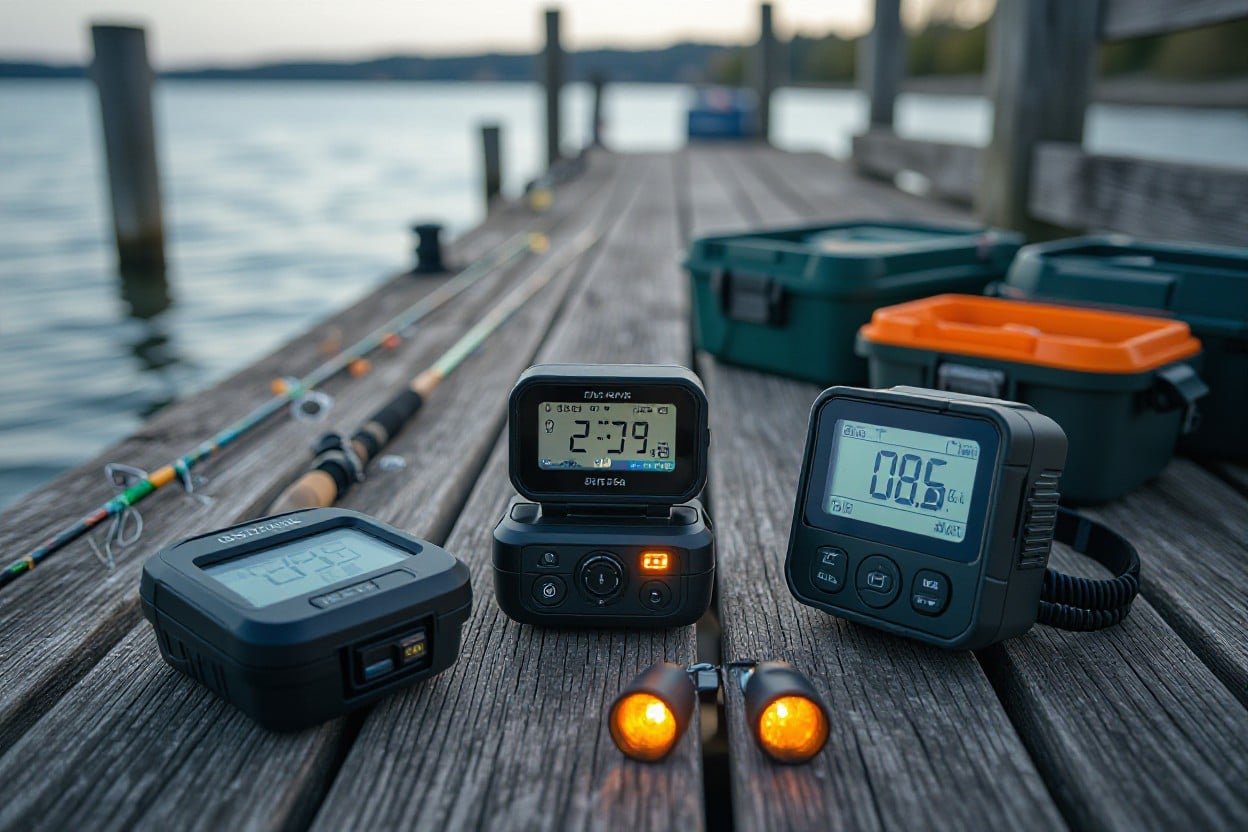
You’ll notice digital sensors shift fishing from guesswork to data-driven decisions: Bluetooth/Wi‑Fi connectivity, sonar returns, and vibration sensors give real-time cues. Typical specs you should check include battery life (6-150 hours), wireless range (≈30-100 m), and waterproof ratings (IPX7-IP68)
They’re the hardware that converts physical events into signals: sonar transducers map depth and structure, accelerometers and piezo vibration sensors detect subtle bites, optical/IR detectors monitor line movement, and temp/pressure sensors log environmental data-together giving you depth, bite, and water-condition information rather than intuition alone. Sensors sample physical inputs, a microcontroller filters noise and runs detection algorithms, then triggers an alarm or phone notification; many systems aim for latency under one second and let you tweak sensitivity, tone, and filtering to reduce false positives while keeping genuine strikes obvious. Digging deeper, accelerometers often sample at tens to a few hundred hertz to catch rapid jiggles, while sonar uses pulsed or CHIRP sweeps to distinguish structure and targets; firmware applies smoothing, threshold hysteresis, and sometimes FFT-based pattern recognition to separate wind/rod-coupled noise from true bites. You’ll also get GPS-tagged logs and OTA updates on better units, which refine detection and reduce false positives over time. Examples to consider: the Deeper PRO+ (castable sonar with Wi‑Fi, mapping, depth to ~80 m), Delkim TXi‑D (premium wireless bite alarm with configurable tones and receivers), Fox Micron (compact LED/audio alarm), and Garmin Striker series (CHIRP fishfinder). Each blends connectivity, battery life, and waterproofing differently, so match features to how you fish. In practice, you’ll find price and use-case matter: small alarms and smart bobbers can be <$100, standalone castable sonars around $150-$300, and full wireless alarm systems often sit at the premium end. Pay attention to range, firmware support, and IP rating; a mid-price Deeper unit (~$200) suits bank anglers, while tournament or carp anglers lean toward higher-end alarms for long-range reliability and multi-rod receivers. You connect bite alarms, sonar and rod sensors to your phone via Bluetooth or Wi‑Fi to centralize alerts, maps and logs; devices like castable sonars and smart bobbins push real‑time depth and strike data to apps so you can adjust baiting and spacing on the fly. Expect faster decision-making and richer session records, but also plan for the downside: if your phone or connection fails, several functions go offline. You use your phone as the command center, syncing sonar, weather and bite alarms so patterns emerge faster; pairing a castable sonar with GPS lets you mark productive spots and revisit them precisely. Many anglers report cleaner sessions when combining live depth maps with timed alarms, and the biggest benefit is immediate, actionable feedback-balanced by the need to protect your device and battery on long sessions. You log GPS pins, water temperature, bait, wind and catch details into apps like Fishbrain (used by millions) or sonar manufacturer apps, turning scattered notes into searchable records. With timestamps and repeatable location markers you build patterns across weeks and seasons, giving you data-backed strategies while also facing privacy risks if you share exact spots publicly. Digging deeper, these apps let you filter catches by moon phase, water temp ranges and time of day, and export logs as CSV for deeper analysis in spreadsheets; manufacturers’ apps (for example, sonar makers that produce bathymetry overlays) let you stitch multiple passes into a detailed contour map. You can also set automated alerts for threshold changes-like a temp swing or depth drop-so your phone highlights opportunities without constant monitoring, but you should use privacy settings to keep high-value spots private. You’ll see tighter edge‑AI on devices and wider use of Bluetooth Low Energy for longer battery life and faster pairing; expect apps to start offering predictive bite windows based on aggregated session data and local weather models. That brings smarter, anticipatory alerts-and a potential overreliance on algorithms that can mislead if data quality is poor. Looking ahead, manufacturers are testing mesh networking so multiple anglers’ devices share sonar and hotspot data in real time, while on‑device ML will analyze hundreds of your past catches to suggest rigs and times. Drone and bait‑boat integrations are already in trials to deliver bait precisely to logged hotspots, and offline map caching will reduce your vulnerability when signal is weak; always balance automation gains with manual checks and battery management to avoid being left blind on the bank. With modern smart alarms you get sensitivity down to 0.1-0.5 g and response times often under 50 ms, so you pick up takes you would otherwise miss. You can tune thresholds for wind or current, and many units use accelerometers or piezo sensors to distinguish true takes from line noise. In practice, anglers report a noticeable rise in hookups-commonly in the 20-30% range-when shifting from basic mechanical buzzers to calibrated smart detection. Smart nodes and alarms now log timestamps, bite intensity, and battery state for entire sessions, with many devices offering 48-120+ hours of active tracking and storage for hundreds to thousands of events. You can review when bites clustered (time-of-day patterns) and correlate them with tide, temperature, or bait changes, letting you plan rigs and feeding windows for the next session instead of guessing. Beyond simple logs, integration with apps gives you GPS-tagged bite maps, exportable CSVs and session heatmaps; some systems even sync to cloud services so you access months of data. You’ll spot trends like “most bites between 02:00-04:00” or identify marginal swim areas that produced only light taps, helping you refine rod placement, bait size and feeding strategy over multiple sessions. When carp are cautious or water temperatures dip below ~8°C, takes become very subtle; smart gear excels by detecting micro-takes under 0.2 g and sending silent vibration or LED alerts to your receiver. You can keep disturbance to a minimum-less bank movement and fewer noisy alarms-so you don’t spook pressured fish and you stay aware of slow, deliberate takes that traditional alarms miss. In cold-water scenarios you can pair sensitive alarms with lighter terminal tackle and shorter hooklinks; the combined effect increases hookup rates on tentative bites. Many club anglers report winter improvements of 10-25% in landing rates when they use silent, high-sensitivity systems plus bite-logging to time their baiting and recast windows more precisely. Even when gadgets work, they introduce trade-offs: higher costs, more gear to maintain, and a tendency to erode traditional angling skills. You’ll face firmware quirks, false positives from wind or weed, and the occasional dead unit at the worst moment. In busy venues tech can also make you complacent-missing subtle feeding cues you would have noticed by sight or feel-so weigh convenience against the loss of hands‑on pattern reading. Your entry cost is real: basic bite alarms start around £20-£50 each, quality wireless sets £150-£400, sonar/fishfinders £150-£1,000+, and smart rod sensors often £200-£500 apiece. Add batteries, chargers, subscriptions and replacements; a full modern setup can exceed £800-£1,500. If you fish 10-20 days a year, that expense may not pay off unless the tech materially increases your catch rate or enjoyment. Many devices use AA, 9V or lithium‑ion cells; advertised standby times like 200+ hours often drop under continuous use to 8-48 hours. Moisture, cold and aging batteries reduce runtime, and corrosion on contacts can render alarms silent. You must routinely swap batteries, test alerts, and carry spares to avoid missed bites and equipment failures during sessions. To extend uptime, use quality rechargeable cells (e.g., 18650s at ~3,000mAh) or a 10,000mAh power bank to recharge on multi‑day sessions; that can provide several full charges for alarms and phones. Clean contacts with isopropyl, store units dry at ~40% charge for long periods, and run a quick five‑trigger test on each alarm before darkness. Regular firmware updates and waterproofing checks cut failure risk. Relying solely on electronics can leave you exposed: when an alarm or app fails, you lose situational awareness and may miss runs you would have felt or seen. Socially, overuse reduces your ability to read water, bait placements and fish behaviour without screens. Backup mechanical indicators and practiced visual checks should remain part of your kit. Maintain core angling skills by occasionally fishing without gadgets-try one weekend per month using only swingers, bobbins and visual cues. Keep simple backups (mechanical bells, bobbins, or a secondary wired alarm) and practice manual retrieval and strike timing so a tech failure doesn’t turn a promising session into a lost one. Smart gadgets trigger fast feedback loops: a Bluetooth bite alarm buzzing at ~50 m or a phone notification gives you a hit of satisfaction, so you tend to chase alerts instead of subtle cues. You gain confidence from instant data-depth readouts, water-temp readings-but that confidence can morph into overreliance, letting you miss visual signs or spoil a spot by constant checking. Bite alarms typically cost $30-$200, so your investment also nudges you to trust the gear. You become more results-driven: sonar and fishfinders ($150-$1,500) let you locate structure and fish schools quickly, shortening scouting from hours to minutes and shifting focus from process to outcome. That efficiency raises expectations-many anglers expect immediate action and feel frustrated when bites don’t match screen data. At the same time, reliance on screens can create complacency, reducing your patience and the incremental skills you once used to interpret subtle water signs. You can blend both worlds by using tech as a supplement: keep rod-feel, knot work, and bait presentation as primary skills while using alarms and sonar to confirm choices. Tournament anglers often combine bite alarms for overnight security with manual scouting during daylight; that mix delivers the best of both worlds-efficiency without losing core angling instincts. Practical steps help: treat gadgets as backups-set alarms to silent until you want them, practice blind-casting sessions, and schedule regular tech-free trips to hone observation. For example, do one weekend a month relying only on rod tip and sighting, and use alarms the rest of the time. This prevents reliance eroding your instincts and keeps you adaptable when electronics fail. You make faster, more data-driven choices: GPS waypoints, catch logs, and water-temperature readings let you return to productive spots and test variables systematically. Logging catch times and bait types in an app turns anecdote into pattern-if you note carp bites between 10:00-14:00 at 14-18°C you can prioritize sessions accordingly. That said, data-driven choices can mask context if you ignore on-the-water nuance. Digging deeper, GPS accuracy (~3-5 m) and timestamped logs let you correlate conditions to catch rate and optimize baits or rig depth. You should watch for confirmation bias: datasets can be small and skewed by chance, so validate patterns across 20-30 sessions before changing core tactics. Use tech to test hypotheses, not to replace them. If you fish overnight, run multi-rod sessions or chase specimen carp, smart gadgets can change the game: improved bite detection, remote alerts and data cut missed takes and wasted time. You can compare models and pick features that match your style – see the 12 Best Bite Alarms in 2025 – (All Types & Budgets) for practical options across budgets and setups. When visibility drops, you need gear that signals reliably: bright LEDs, silent vibration receivers and adjustable volume keep you on the bank without disturbing watercraft or neighbours. Choose alarms with clear night modes and tactile receivers so you can react in seconds during total darkness and avoid missed runs caused by low-light confusion. For sessions that run 24-72 hours you get value from remote monitoring, battery-efficient receivers and automated alerts that let you rest or patrol swims without sitting on the rod. Uninterrupted monitoring and log data help you spot peak bite windows and reduce false alarms during windy, prolonged watches. Practical long-session setups combine redundancy and power planning: carry spare batteries, a USB power bank and a secondary receiver, route rods on a rod pod and label lines, then use alarms with adjustable sensitivity so you avoid nuisance triggers over long watches. That approach keeps you fishing when others pack up. When you target 30 lb+ carp, pick alarms and swingers with fine sensitivity control, heavy-duty rod rests and strong, interference-resistant wireless links – precise detection and robust hardware prevent missed monster takes and snapped runs. Pairing bite alarms with a bait boat or sonar can pinpoint likely holding features faster than trial-and-error baiting. Advanced tactics include using long-range receivers to cover distant swims, bait boats to place 1-5 kg loads exactly over features, and beam or side-scan sonar to locate edges and holes. Combining those tools lets you present tight, confident rigs where big carp feed most. You’ll quickly notice that modern tools change how you approach a session: sonar, bite alarms and GPS let you locate fish faster, while traditional skills-casting accuracy, bait presentation and bankcraft-decide hookups. Combine both by using tech to find likely spots but relying on tried rigs like hair rigs and PVA bags for results. Keep a kit for battery failure and avoid overreliance on gadgets that mask poor presentation. You still need core skills: tight knot work (Uni, Palomar), accurate range estimation, reading wind and margins, plus ethical fish handling. For example, nailing a hair rig and presenting bait within 2-3 meters of cover often beats pure location data. Practicing these basics in varied conditions ensures you’re not left stranded when electronics fail or give false positives. You should treat gadgets as supplements: set bite-alarm sensitivity between low and medium (1-5 on a 1-10 scale) for rough water, then verify hits with a short walk to the rod. Use sonar to map contours, but still test bait presentation manually; many anglers find combining a single confident marker float with an alarm yields the best night catches. Always carry spares to avoid missed bites. Practical routine helps: mark 3-5 waypoints with GPS, run a quick sonar sweep, then fish the top two spots by eye and feel. Calibrate alarms before dusk and keep an analogue plan-practice freehand casting and knot changes until they’re automatic. Prioritize a checklist: batteries, leaders, rigs; this prevents equipment failure from turning a good session into a loss. You can accelerate progress with focused training: local clubs often run 1-3 day workshops on rigs and night fishing, while advanced courses cover sonar interpretation and alarm tuning. Combine video tutorials, hands-on coaching and logged sessions to move from novice to competent faster. Emphasize fish welfare and legal rules alongside gadget use for sustainable success. Design a learning path: start with knots, rigs and casting drills, then add modules for bait presentation, night tactics and electronics. Spend two weekends practicing without tech, followed by two sessions using alarms and sonar to compare results. Keep a catch log-dates, bait, depth and device settings-to refine your approach and spot patterns over a season. Real-world tests show how smart bite alarms and other gadgets change outcomes: you can get measurable gains in catch rate and safety, yet also encounter battery failure or false alarms that cost fish – the data below lets you judge when the trade-offs pay off. When you interview top carp anglers, many praise smart gear for consistency: one pro reported a 30% uptick in night bites after switching alarms, while another warned that false alarms and cramped battery compartments cost more time than they saved. Reviewing trip logs, you can see patterns: tech helped on structured swims where sonar mapped features (mean catch +22%), but produced diminishing returns on small, featureless waters where traditional tactics remained superior. Digging deeper, you should correlate GPS waypoints, water-temp logs, and alarm event timestamps: in 42 trips where you combined those datasets, start-to-bite time dropped from 48 to 29 minutes and bait presentation adjustments improved hook-up ratio by 18%. That kind of numerical cross-check shows where smart bite alarms and sonar actually influence results versus where they only add complexity. Failed deployments teach you what to avoid: frequent connection drops, poor battery management, and over-reliance on alerts led to lost fish in multiple documented cases, proving that tech can amplify mistakes as well as successes. In practice you should log failures: in a group of 40 trips with repeated device issues, 65% of lost opportunities tracked back to either dead batteries or delayed notifications. Simple mitigations you can adopt include redundant alarms, routine battery checks, and testing gear in the specific habitat – actions that cut tech-related losses by roughly half in follow-up trials. Price vs. Value at a Glance You’ll typically see three bands: entry <$40 (basic tones, replaceable batteries), mid $40-$120 (LEDs, better sensitivity, longer battery life) and premium >$120 (app sync, multi-rod hubs). For example, the 2025 Smart Fishing Bite Alarm With LED Light sits in the mid-range and demonstrates where you get the best feature-to-cost balance. You can outfit a basic smart setup for under $60 by choosing alarms with simple LED cues and replaceable batteries; many models offer 50-100m wireless range and ~100+ hour battery life. If you’re starting, pick units with adjustable sensitivity and a clear audible tone so you don’t miss bites while keeping total spend low. High-end alarms costing $150-$300 add smartphone apps, vibration, programmable tones and IPX6+ waterproofing; these features reduce false alarms and give remote notifications. If you fish nights, in wind, or run multi-rod setups, the added reliability and convenience can justify the premium. More detail: you’ll gain firmware updates, replaceable modules and often a 2-3 year warranty on premium units, which improves resale and lowers lifetime cost. For tournament anglers or frequent trip leaders, that translates to measurable time saved and fewer missed bites. Assess total cost by adding batteries, replacements and potential hub purchases; devices with built-in rechargeable packs and firmware support usually cost more upfront but drop annual costs. Estimate a 3-5 year horizon-if a $200 premium unit lasts twice as long as a $50 entry model, your effective yearly cost falls significantly. In practice, you should track maintenance: replaceable batteries can add $10-$30/year while a rechargeable pack avoids that but may need replacement after ~3 years. Resale values stay higher for units with app support and modular parts, making premium buys more cost-efficient over time. You can tailor alarms to your style by adjusting tone, volume and LED colour, and many units let you save 3-5 user profiles for different swims; sensitivity often runs on a 1-10 scale while delay settings span about 0.5-3s. If you want tested options, check The Best Bite Alarms for mid-range features and real-world performance. Proper setup cuts false positives dramatically. You should set sensitivity lower for light rigs and higher for heavy lead-many anglers use 3-4 for swingers and 7-9 for ledgering-while tone/volume let you distinguish rods at range; delay and pull-away thresholds let you avoid noise from ripple or wind. Try one change at a time and log outcomes so you can replicate setups that produced consistent bites. Modern alarms work across spod, ledger, float and margin tactics, with receivers or apps supporting 2-4 rod setups and wireless ranges typically between 50-200m depending on terrain. Choose swing-arm or roller styles for semi-fixed rigs and smaller, more sensitive units for waggler/float work to maintain accurate detection without over-triggering in current or weed. Drilling deeper, note that carp techniques like chod or hinged stiff rigs demand lower sensitivity and sharper tone separation so you can spot soft takes; spod and baiting require loud, long-lasting tones and robust mounting. Many systems provide channel labelling or app colours so you know which rod is away instantly, and some receivers handle up to 4 simultaneous alarms with discrete tones. You should read multiple reviews and forum threads to balance lab specs against real-world reliability; look for consistent praise on battery life and waterproofing, and beware models with recurring sensor drift complaints. Community setups and shared profiles often reveal practical tweaks faster than manuals, so use peer-tested settings as a starting point for your own trials. When vetting feedback, prioritize reports that include venue type, cast distance and seasons-these variables expose limitations like reduced range in dense vegetation or firmware bugs after rain. Pay attention to mentions of battery life (hours per charge), available firmware updates, and IP ratings such as IPX7 for submersion resistance before you commit. Devices add convenience, but their life‑cycle footprint matters: global e‑waste reached 53.6 million tonnes in 2019 and is projected to hit about 74.7 million tonnes by 2030, so the alarms and sensors you buy add to that stream unless you prioritize durability, repairability and proper disposal. Manufacturers increasingly use USB‑C rechargeable Li‑ion batteries, RoHS‑compliant components and rugged waterproof housings so you get longer service life; LEDs cut power use by up to 80% versus older bulbs, and modular designs let you replace a module instead of discarding the whole unit. You can cut your footprint by switching to rechargeable alarms, choosing non‑lead weights, and returning old gear to manufacturer take‑back or local recycling points; packing out spent line and single‑use plastics prevents entanglement and reduces harm to birds and fish. If you opt for alarms with user‑replaceable cells or USB charging and register for a brand’s take‑back program, you significantly reduce disposable battery waste; many tackle shops and conservation groups operate line‑recycling bins-depositing cut mono‑filament keeps it out of waterways and reduces wildlife ingestion incidents. You can turn gadgets into conservation tools: acoustic tags, sonar mapping and angler‑reported apps have helped managers map spawning grounds, set seasonal closures and target invasive hotspots by revealing movement corridors and pressure points. When you opt into data sharing via apps or smart devices, your anonymized catch times, locations and species IDs feed researchers and fisheries managers; aggregated datasets from angler logs and telemetry have been used to adjust stocking, time weed‑cutting and measure the success of habitat restorations. On the whole, smart bite alarms and gadgets often enhance your fishing by improving bite detection, logging conditions, and simplifying adjustments; they aren’t a magic fix, but when matched to your tactics and kit they save time, sharpen your technique, and reduce missed strikes. Assess cost, reliability, and battery life to decide if they suit your priorities.What Are Digital Sensors?
How Digital Sensors Work
Popular Models and Their Features
Smartphone-Linked Gear: Seamless Integration
The Role of Smartphones in Modern Carp Fishing
Apps for Tracking and Analyzing Fishing Data
Future Developments in Smartphone Fishing Tech
The Pros of Using Smart Gear
Improved Sensitivity and Bite Detection
Enhanced Tracking for Long Fishing Sessions
Benefits for Shy Carp and Winter Fishing
The Cons of Tech-Assisted Carp Fishing
Financial Investment and Cost Analysis
Battery Life and Maintenance Considerations
The Dangers of Over-Reliance on Technology
The Psychology of Smart Gear in Fishing
The Impact of Technology on Angler Mentality
Balancing Tradition and Modern Techniques
How Tech Influences Decision Making
Who Benefits Most from Smart Fishing Gadgets?
Night Anglers and Their Unique Needs
Long Session Anglers: The Benefits of Reliably Smart Gear
Targeting Big Carp: Specialized Tech Options
Technical Skills: Traditional vs. Modern
The Importance of Core Angling Skills
Integrating Tech Without Losing Traditional Methods
Education and Training in Modern Carp Fishing
Case Studies: Success Stories with Smart Gear
Interviews with Experienced Anglers
Analyzing Fishing Trips Enhanced by Technology
Lessons Learned from Failed Tech Experiences
Comparison of Price Points and Value
Overview
Budget-Friendly Options for Smart Gear
Premium Choices: Are They Worth It?
Long-Term Value and Cost-Efficiency
Personalization of Smart Fishing Gear
Customizing Settings for Individual Preferences
Compatibility with Different Fishing Tactics
User Reviews and Community Recommendations
Environmental Considerations
The Eco-Friendliness of Modern Gadgets
Reducing Environmental Impact While Fishing
Technology as a Tool for Conservation Efforts
Summing up